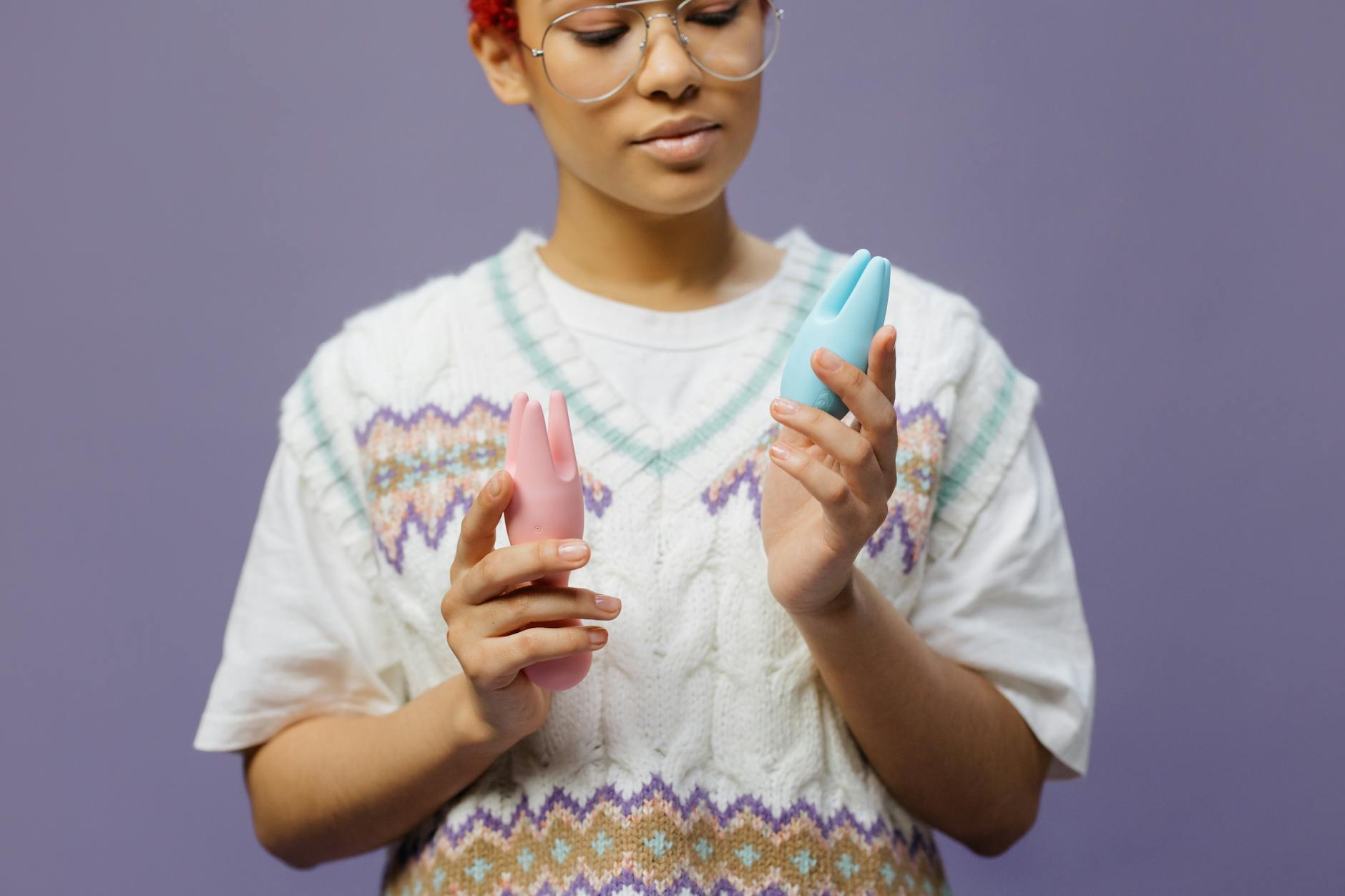
For years, I thought adding a vibrator to partnered sex meant admitting something was broken. As if asking for a clitoral vibrator during sex meant I was too difficult, too needy, or that my partner wasn't doing enough. Turns out that's a cultural script, not a fact.
The actual truth: lemon vibrators and other clitoral suction toys don't replace anything. They solve a specific friction problem that exists in almost every partnered sexual scenario.
Here's the biomechanics nobody explains. During intercourse or partnered sex, your clitoris is in motion. A traditional vibrating bullet or wand relies on direct, sustained contact with one spot. The moment your body shifts (which it does, constantly, during sex), you lose the contact point. So you're either repositioning the toy every eight seconds or concentrating so hard on keeping it still that you disconnect from the actual sensations and your partner.
Lemon vibrators work differently. The suction mechanism creates a seal and engages a broader area of nerves at once. You don't need laser-precise positioning. The toy stays stimulating even with movement, which means you can actually be present during partnered sex instead of managing the hardware.
Clitoral tissue has roughly 8,000 nerve endings concentrated in the glans. A traditional vibrator fires rapidly at one point. Suction toys create negative pressure that stimulates the entire clitoral complex, including the internal parts that extend several inches into your body. This means deeper, less location-dependent stimulation.
During partnered sex, that matters because your clitoris is never perfectly still. It's moving with your hips, shifting with your partner's movement, changing angle. A lemon vibrator's suction seal adapts to that. A bullet vibrator fights it.
I noticed this within the first time we used one together. I could breathe. I could make eye contact. I could actually feel my partner instead of narrating a running commentary in my head about whether the toy was still in the right spot.
The conversation matters more than the toy. Here's what I recommend instead of the awkward lead-up:
Don't say: "I can't come unless we use this." (Implies a problem. Creates pressure.)
Do say: "I want to try something that might feel different for both of us. I read that these toys work really well during sex because they don't fall out. Want to see?"
Frame it as curiosity, not crisis. And here's the part nobody tells you: most partners are relieved. A lot of men worry about whether they're doing enough or hitting the right spot. A lemon clitoral vibrator removes that guesswork. Suddenly there's a clear path to pleasure that has nothing to do with his performance.
Lemon vibrators work best during partnered sex in specific positions. Positions where the toy has a clear line to your clitoris without your partner's body blocking it.
Positions that work well: You on top, your partner inside you. Them from behind while you're on your knees or stomach. Side-by-side face-to-face. Essentially, angles where you can reach your clitoris or your partner can hold the toy without it being crushed between your bodies.
Positions that don't work: Him on top, chest-to-chest. The toy gets trapped. Save that position for when you're not using external stimulation.
Water-based lubricant makes the suction toy even more effective. It improves the seal and feels better on sensitive skin. Apply it to the toy's rim and to your clitoris before engaging. This is true whether you're using a lemon vibrator or any other clitoral suction toy.
Start with lower intensity settings and work up. You're building sensitivity, not fighting for stimulation. Most people find that settings 2-4 on a lemon vibrator create the right balance during partnered sex. Full power can feel overwhelming when your nervous system is already engaged with your partner.
Here's what I didn't expect. Using a lemon vibrator during partnered sex didn't just change the physical sensation. It changed the dynamic. When I stopped worrying about my body's response, I was actually present for my partner. I could pay attention to what felt good for them, to the intimacy, to the moment itself instead of the ongoing internal monologue about whether my orgasm was happening.
My partner noticed the difference too. Less tension. More responsiveness. More eye contact. The toy became something we used together, not something I needed him to manage.
That's the relationship shift people don't talk about. Better sexual satisfaction often means better partnership satisfaction overall. You're less resentful, less discouraged, more interested in each other.
What to check in about: Did it feel good? What would feel better next time? Did it change anything about what you want from this?
Honestly, most partners have opinions. Some love holding it. Some love watching. Some have ideas about angles or timing. Actually asking for that feedback matters. It's not a tool you use at him. It's something you're exploring together.
How do I know if my partner will be receptive to using a lemon vibrator during sex?
Frame it as an experiment, not an ultimatum. Most partners are curious. Lead with what's in it for them: less performance pressure, seeing you genuinely aroused, a new experience together. If someone gets defensive about the idea, that's information about the relationship dynamic worth exploring separately.
Will using a clitoral vibrator make me stop wanting regular partnered sex?
No. In fact, the opposite. When you actually reach orgasm reliably, partnered sex becomes more appealing, not less. You associate it with pleasure instead of frustration.
Can we use a lemon vibrator if we have penetrative sex but I don't climax from penetration alone?
Yes. This is actually the most common use case. Roughly 70 percent of people with vulvas don't reach orgasm from penetration alone. A lemon clitoral vibrator bridges that gap without complicated positioning or constant repositioning.
How long can I use a clitoral vibrator during partnered sex before it gets uncomfortable?
There's no hard limit, but most people find 10-15 minutes of continuous stimulation is the sweet spot. After that, sensitivity can decrease. Listen to your body. If sensation feels like it's fading, take a break and reconnect without the toy for a bit.
What if my partner wants to use it but I don't feel comfortable asking for it first?
That's a communication issue worth addressing outside the bedroom. If you can't ask for what feels good sexually, that's a signal the relationship needs some work. Consider talking to a couples therapist about vulnerability and desire.
Will a lemon sexual toy make partnered sex feel less intimate?
The opposite. Shame makes sex less intimate. Pretending your body works differently than it does makes sex less intimate. Bringing in a tool that lets you actually be present and feel good makes sex more intimate.
Lemon vibrators didn't fix my partnered sex. My partnered sex was already good. What they did was remove the single biggest friction point: the gap between how my body actually works and the assumption that penetration alone should be enough. Once that gap closed, everything else improved. Better orgasms. Better presence. Better connection. Better conversations about pleasure.
If you're considering trying a lemon clitoral vibrator during partnered sex and feeling hesitant, the hesitation is probably about something other than the toy. It's about whether you trust your partner with the truth about your body. Whether you trust yourself to ask for what feels good. Whether pleasure feels earned or allowed.
Those are the conversations worth having. The toy just makes them easier.