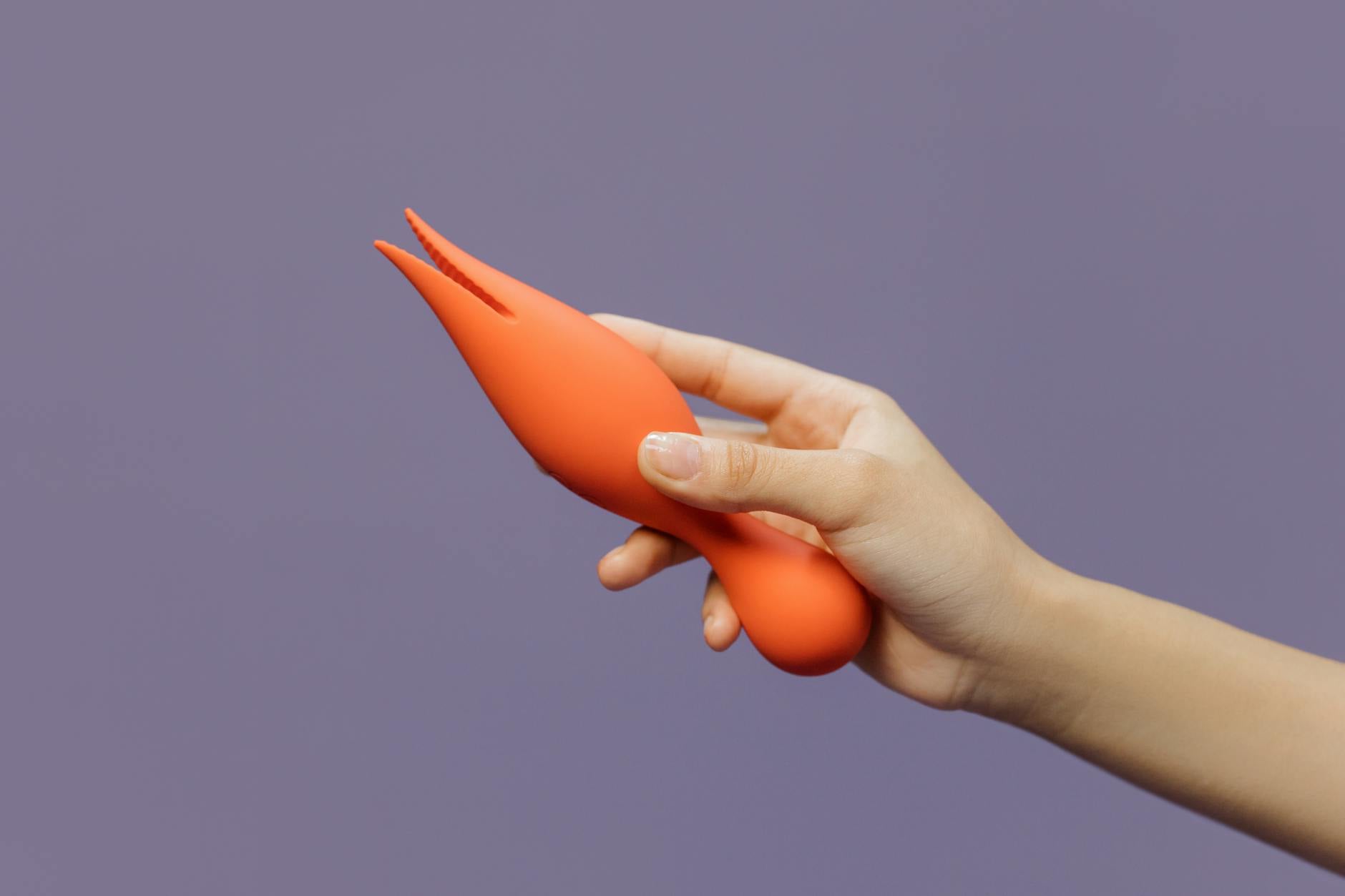
How to Use a Lemon Vibrator When Orgasm Timing Feels Off
Your body isn't broken because you finish at different times. But the mismatch can feel awkward, unsatisfying, or pressured. Here's how to reclaim pleasure for both of you.
Let's be real. Orgasm timing is one of those things that feels like it should be automatic, natural, synchronized like a rom-com montage. It's not. Most couples experience some version of the mismatch. One person finishes in five minutes. The other needs twenty. One person can come multiple times. The other needs recovery time. And suddenly what should feel good becomes something you're managing, apologizing for, or quietly resenting.
Here's what I've seen in my practice: couples wait way too long to talk about this, and when they do, they frame it wrong. "You finish too fast" or "Why does this take so long for you" aren't conversations. They're complaints dressed up as questions. The real conversation is about pleasure, not performance. And it's fixable.
Physiologically, orgasm timing differences are completely normal. Your nervous system is literally different from your partner's. Different anatomy, different sensitivity patterns, different arousal curves. Women with vulvas typically need more sustained stimulation to reach orgasm than partners with penises. Some people with clitorises can orgasm in two minutes. Others need fifteen or more. Add in factors like stress, medication, hormonal fluctuations, and what worked last month might not work this month.
But here's the thing: the actual difference in timing isn't usually the real problem. The real problem is what happens around it. The pressure. The stopping and starting. The "let me know when you're close" that turns sex into a race with an invisible finish line. That's where couples get stuck.
A lemon clitoral vibrator changes the equation because it separates your pleasure from dependency on your partner's timeline. You're not asking them to wait or slow down. You're not silently frustrated while you're waiting for them. You're both getting what you need in the same moment.
The quick finish scenario. Your partner comes fast, and you need way longer. Classic dynamic. They feel embarrassed or pressured to "last longer." You feel abandoned or stuck with the choice between staying present while unsatisfied or mentally checking out. Both bad.
The plateau problem. You reach arousal and just... plateau. You're enjoying it, but orgasm isn't happening. Your partner is either waiting (which adds pressure) or finishing (which leaves you unfinished). Neither option feels great.
The multiple vs. single dynamic. One person has multiple orgasms easily. The other has one and done. After that first one, they're overstimulated, sensitive, or just done. The person who comes once feels rushed or inadequate.
In every scenario, a lemon vibrator that works specifically for clitoral suction gives you agency. You're not waiting for your partner to adjust or waiting for your body to catch up. You're using a tool designed to work with your body's actual rhythm.
This is the part where communication actually matters. Not the awkward sit-down talk, just the honest, low-stakes conversation.
"I've been thinking about how we could both feel better during sex. I'd like to try using a toy during our time together. Not instead of you, but alongside. So I can finish without either of us feeling rushed."
That's it. Most partners are relieved. Genuinely. Because they've also felt the pressure.
If your partner seems hesitant, the resistance is rarely about the toy. It's usually about one of three things: they worry it means you're not attracted to them, they're insecure about "not being enough," or they don't understand how it works. Address the actual fear, not the toy.
"I want you inside me and also want to come. These aren't mutually exclusive. The Lem just means we both get what we need."
That changes the frame from "you're not enough" to "here's how we both win."
Pattern 1: You warm up together, then use it. You and your partner foreplay normally. When they're inside you (if penetration is part of your routine), use the lemon vibrator on your clitoris. The suction technology doesn't interfere with penetration the way traditional vibrators can. You get clitoral stimulation while they get the sensation they want. You can come together or separately, but you're both getting pleasure simultaneously.
Pattern 2: They finish first, then you use it. If your partner climaxes quickly, instead of everything stopping, they can hold you, kiss you, stay present while you use the vibrator. Many people feel less pressure when their partner has already come. You're not performing. You're just finishing what you started.
Pattern 3: You both use something. Not every couple needs this, but some do. If you both want simultaneous orgasms, a vibrator on you plus manual stimulation or a different toy for them can help bridge the gap. You're not competing for orgasm. You're each using what your body needs.
Water-based lubricant is your friend here. The lemon vibrator's suction works better with a light layer of lube. Not dripping wet, just a small amount so the seal is smooth and the sensation is clear.
Start at a lower intensity. Pattern 1 or 2 on the Lem usually feels right. You can increase if you need more, but starting lower gives you more control over when and how you reach orgasm. You're not at the mercy of maximum intensity.
Timing-wise, introduce the vibrator when you're already aroused. Don't start with it as the opening move. Get into the moment first, then bring it in. This feels more natural and keeps the focus on connection instead of on a device.
Communicate in the moment, too. "A little higher," "Can you stay here," "I'm close." Your partner isn't a mind reader, and you're not either. The words actually make it hotter because now everyone's tracking pleasure instead of guessing.
Here's what I see most often. Once couples stop pretending their bodies should work in sync, the actual sex gets better. Not just physically. Emotionally. Because you're not carrying resentment into the bedroom. You're not performing. You're not apologizing for how your nervous system works.
The partner who finishes quickly often says they feel less anxious. They came, and nobody's frustrated with them. The partner who needs longer says they feel less invisible. They get to finish. Both people report more pleasure, more often.
And honestly, a lot of couples find that introducing a lemon clitoral vibrator into their routine becomes a regular part of their intimacy. Not because something was broken. Because something was trying to work and finally can.
If you're consistently unable to orgasm even with a vibrator, or if your partner suddenly has a dramatic change in how long they last, that's worth checking out separately. Sometimes timing problems signal medication side effects, stress, hormonal shifts, or relationship friction that needs attention beyond technique.
But most of the time, orgasm timing mismatch is just... bodies being bodies. Different speeds, different needs. The Lem works because it respects those differences instead of fighting them.
Yes, if the gap is about biology. If one person needs thirty minutes and the other needs five, that's a speed problem a vibrator solves. But if the gap is coming from stress, resentment, or anxiety, the vibrator helps but won't fix the underlying issue. Sometimes you need both the tool and the conversation.
Not at all. It's honestly pretty standard now. Plenty of couples use clitoral vibrators during penetration because it addresses the reality that stimulation needs aren't always met by one body alone. The Lem's suction design specifically works well during partnered sex because it doesn't get in the way. It adds to the experience instead of complicating it.
Then start with why they're uncomfortable. Is it about jealousy? Feeling inadequate? Unfamiliarity? Most discomfort isn't about the toy itself. It's about what they think the toy means. A conversation where you're clear about your attraction and your needs usually shifts things. "I want to come during our time together" is a pretty reasonable request.
Possibly, but not always in the way people worry about. Some people find that using a vibrator regularly actually teaches their body what feels good, and that information transfers to partnered sex. Others find they need the toy every time, and that's fine too. Your body adapts to what works for it.
Timing alone shouldn't kill your desire to be with your partner. If you're dreading sex, avoiding intimacy, or feeling resentful before you even get into the bedroom, that's bigger than orgasm sync. That's connection work. A vibrator might help, but you might also need to address what's really going on. If you're unsure, talking to a relationship therapist can help you figure out whether this is a technique problem or a connection problem.
The Lem's suction technology is specifically designed to work differently than traditional vibrators. It doesn't vibrate in the same way, so it doesn't interfere with penetration the same way. The sensation is also more concentrated, which means you can reach orgasm more efficiently without maximum stimulation required. If timing is your issue, that matters.
I want to be clear about something. The way your body reaches orgasm isn't a flaw. It's not something you should apologize for or work around by tolerating unsatisfying sex. Your pleasure matters as much as your partner's. A lemon vibrator like the Lem isn't a Band-Aid for a broken system. It's a tool that acknowledges that pleasure doesn't require perfect synchronization to feel good for everyone.
Start the conversation, try the tool, see what changes. Most couples find that the relief alone makes everything feel better.