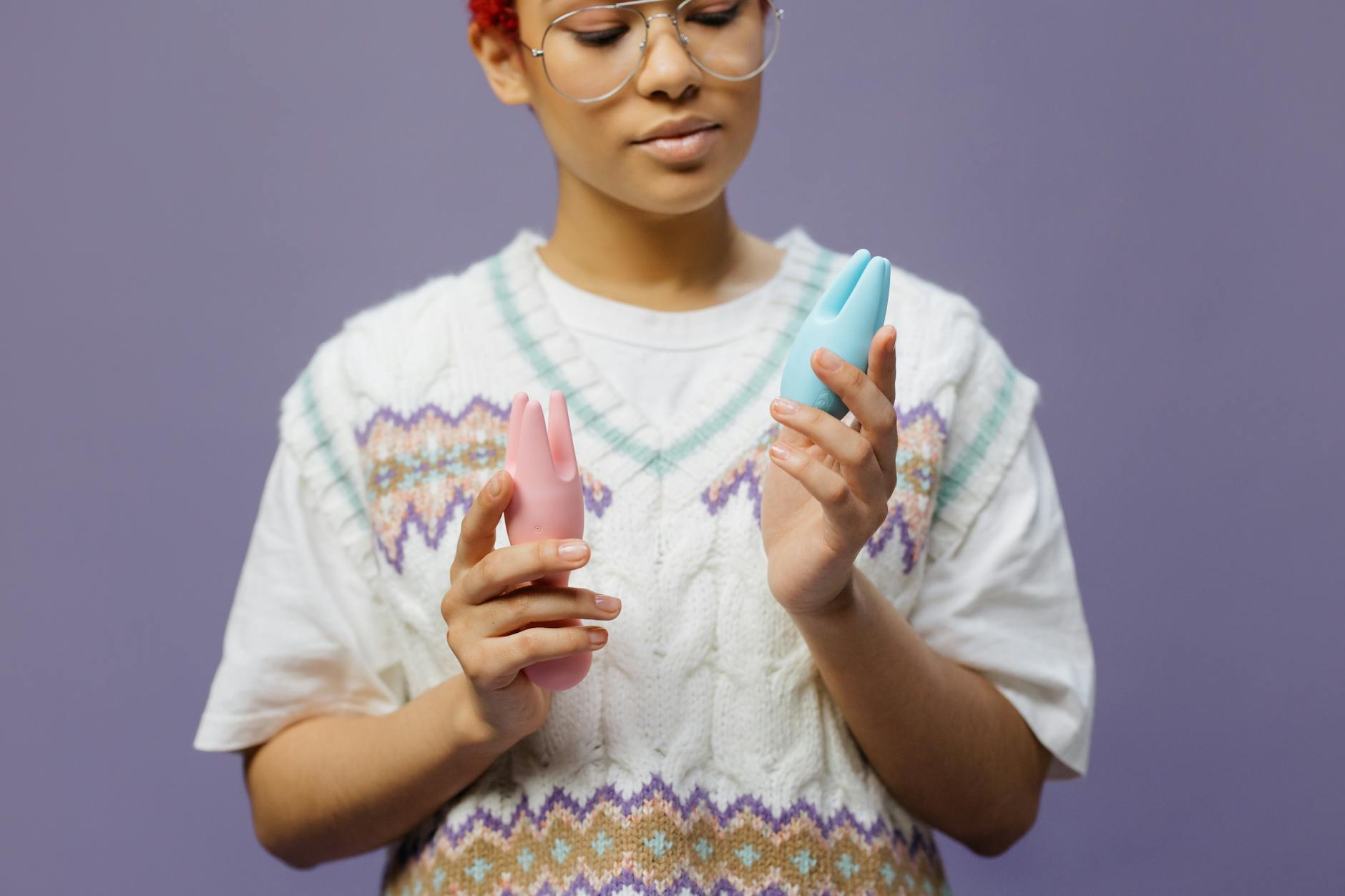
How to Use a Lemon Vibrator When Recovery Takes Longer Than Expected
Healing isn't linear. When your body or mind needs more time to reconnect with pleasure, here's how a lemon clitoral vibrator becomes part of a gentler, more patient process.
Recovery rarely follows a roadmap. You get sick, injured, or emotionally depleted, and everyone seems to have a timeline in mind: six weeks for physical healing, three months for emotional resilience, a vague "you'll feel better soon." Then it doesn't happen that way. Your body stalls. Your nervous system stays guarded. Your desire for touch remains somewhere in the background, patient but absent.
This is where many people hit a wall with reconnection to pleasure. You want things to be normal again. You're frustrated it's taking longer. And using a lemon vibrator right now feels either premature or like you're somehow forcing something that should come naturally. Let's talk about what actually works when recovery extends beyond the expected timeline.
Here's what I see repeatedly in my practice: people conflate physical healing with emotional or sensory readiness. They're not the same thing. You can be cleared medically to resume sexual activity and still not feel present in your body. You can be past the acute phase of grief and still feel numb to pleasure. A lemon vibrator isn't going to shortcut that gap. But it can help you listen to what's actually happening instead of what should be happening.
When recovery extends, your nervous system often needs permission to move slowly. Most of us are trained to push through, to hit benchmarks, to prove we're "back to normal." With pleasure, that urgency becomes an obstacle. The clitoral nerve network doesn't respond well to force. It responds to safety, attention, and time.
Three reasons a lemon clitoral vibrator serves recovery better than many other tools:
1. Precision without pressure. The suction mechanism of a lemon vibrator creates consistent, focused stimulation without requiring manual effort or the variable pressure of hands or traditional vibrators. When your body is depleted, this matters. You're not working. You're receiving.
2. Control over intensity. The Lem's pattern options allow you to start absurdly low and stay there. Pattern 1 is barely perceptible. You're not committing to full-throttle sensation. You're exploring the edges.
3. Neurological reset potential. The suction sensation engages the parasympathetic nervous system differently than friction-based stimulation. It can feel calming rather than activating. During extended recovery, that distinction is everything.
Most people wait until they feel desire before touching themselves again. During extended recovery, that can mean months of waiting. But readiness and desire aren't always connected. You can practice presence and gentle stimulation without waiting for spontaneous arousal to appear.
Start here: spend time noticing your clitoris without any agenda. No vibrator yet. This sounds simple and often gets skipped because it feels too basic. Don't skip it. Put a hand there. Notice the texture, the sensitivity, whether it feels numb or alive. Notice your thoughts. Are you checking for damage? Waiting to feel something? Just observing? Spend three sessions just looking and noticing before you introduce anything.
Then, bring the Lem in. Set it to Pattern 1. The lowest setting. Apply it for 30 seconds and stop. Notice what happened. Did it feel good? Neutral? Overwhelming? That information is more valuable than any outcome. You're not trying to orgasm. You're gathering data about where your body is.
If it felt good or neutral, repeat three to four times over the next week. Same pattern, same duration. You're building a safe association with the tool and with touch.
Let's be direct: extended recovery is frustrating. You're ready to feel normal again before your nervous system is ready to deliver that. Using a lemon vibrator can inadvertently become another measuring stick. "I should be having stronger sensations by now." "Other people would be orgasming by this point." Those comparisons kill the process.
Instead, I recommend tracking what changes without comparing to any external timeline. Week one: Pattern 1 feels numb. Week four: Pattern 1 feels tingly. That's progress. Week eight: Pattern 2 feels interesting. That's significant progress, even if you're not orgasming yet.
The nervous system doesn't like being rushed. It also doesn't like being ignored. A lemon vibrator gives you a middle path: consistent, gentle exploration that respects the pace your body actually needs, not the pace you think you should be on.
If you're in a relationship, extended recovery often creates secondary stress: your partner's expectations, their frustration, their worry that things won't return to normal. That tension doesn't help your nervous system relax into pleasure.
Have one conversation, separate from any intimate moment. Say something like: "My recovery is taking longer than we expected. I'm working on it with my body, not against it. I'd like us to be patient together." Then actually invite them into the process if you want. Show them the Lem. Explain that you're building sensation back gradually. Their job isn't to make you feel better faster. Their job is to sit with you in the slower pace.
Many partners respond beautifully to this. They stop adding pressure and start adding presence. That shift alone can accelerate nervous system healing more than any device.
Extended recovery sometimes means extended pain, numbness, or dissociation around touch. If six months in you're still unable to feel anything or if sensation causes pain, a pelvic floor physical therapist becomes valuable. They can assess whether tissue damage, nerve compression, or pelvic floor dysfunction is slowing things down. Sometimes what feels like slow emotional recovery is actually a physical issue.
Similarly, if recovery is accompanied by significant anxiety or trauma responses around touch, a therapist trained in somatic work can help. You and your Lem can do good work together, but some nervous system patterns need professional guidance to unwind.
Here's what shifts when you stop using a lemon vibrator as a measuring stick and start using it as part of a slower healing process. Pleasure becomes something you're rebuilding, not something you're chasing. The practice itself becomes the recovery, not just a tool toward recovery.
Some of my clients find their most powerful orgasms come months into this slow practice, not weeks. Others find that sensation returns gradually over a year or more. Both are okay. What matters is that you're staying connected to your body and listening to what it actually needs rather than what the timeline suggests it should need.
Your recovery timeline is yours alone. A lemon vibrator doesn't rush it. It just helps you stay present while it unfolds.
That depends on the type of injury or trauma. For physical recovery like surgery, follow your medical provider's timeline for resuming sexual activity. For emotional or relational trauma, there's no fixed timeline. You can begin gentle exploration when you feel even slightly curious, but that's different from having full sensation or desire. Start low and observe. Your body will let you know.
Then Pattern 1 is too strong right now. Bring the vibrator close without full contact. Let the sensation reach your clitoris from a slight distance. You're still introducing the sensation gradually without being inside the suction. Many people find this intermediate step helps when full suction feels like too much.
It can help certain types of healing. Regular gentle stimulation can improve blood flow and keep the nervous system engaged, which supports physical recovery. But it won't bypass emotional or trauma-related recovery. Think of it as one part of the process, not the engine of recovery itself.
Completely normal. Numbness is often the nervous system's protective response. It's not permanent. The Lem can help you gently introduce sensation back in small doses while honoring that protective numbness.
That's a relationship conversation, not a vibrator problem. You might say: "My body needs time. Pressure makes this harder, not easier. I need you to trust my process." If they continue pushing, couples therapy can help you both navigate this transition.
When Pattern 1 starts to feel predictable or slightly less intense than you're comfortable with, explore Pattern 2 once. See how it lands. You don't have to stay there. You can alternate between patterns across different sessions. There's no rush to progress to higher intensities. Some people find their favorite pattern is always 1 or 2, and that's fine.
Recovery that takes longer than expected isn't failure. It's your body and mind asking for patience. A lemon vibrator becomes most useful when you stop treating it as a tool to speed things up and start using it as a way to stay present while things unfold at their actual pace. That shift, from rushing to listening, often changes everything.
If your recovery is extended and you're feeling stuck, reach out. We're here to help you think through what your specific situation needs.