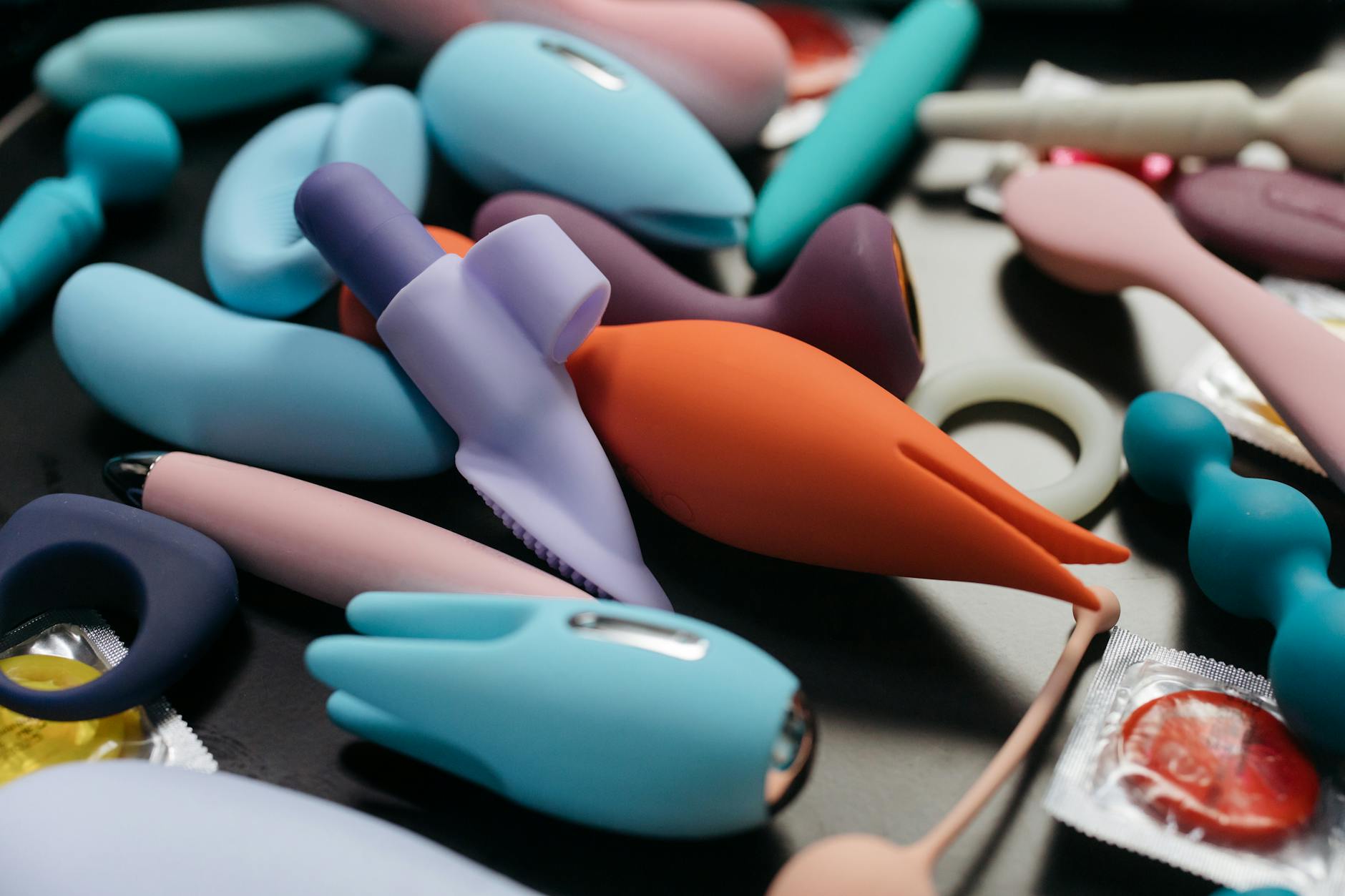
One partner lights up at the idea of intense vibration. The other winces just thinking about it. One loves direct clitoral contact. The other needs the gentlest possible touch. This isn't a small incompatibility. It's one of the biggest silent divides in partnered sex, and most couples handle it by one person giving up.
A lemon vibrator, with its range of intensity levels and the unique sensation profile of air-suction technology, becomes something different when you stop thinking of it as one person's toy and start thinking of it as a bridge between two different pleasure maps. The lemon clitoral vibrator isn't just adjustable. It's translatable.
This isn't about one partner being "broken" or having low sensitivity. Pleasure preference is built from a combination of factors: nerve density (which varies wildly person to person), arousal capacity (how quickly you get there and how much stimulation you need to stay there), attention and distraction, and learned patterns from years of solo exploration.
One partner might have spent years finding that only high-intensity sensation registers as pleasure. The other might have learned that anything beyond pattern 3 feels overwhelming and pulls them out of the moment. Neither is wrong. Neither is negotiable on a biological level.
But here's what changes things: when you have a tool that works across that entire spectrum without requiring either of you to perform or compromise, the dynamic shifts. You're not taking turns anymore. You're both in it together.
Start by treating the lemon vibrator as a shared object with distinct settings, not as his toy or hers. Run through the intensity levels together without any sexual goal in mind. Let the person who typically prefers gentleness try patterns 1 through 4. Let the person who likes intensity explore patterns 5 through 8. Don't evaluate. Just notice.
What you're mapping is not "what feels best" but "what feels present." The right intensity isn't the one that produces the fastest orgasm. It's the one where you feel most in your body and aware of pleasure happening in real time.
Once you both know your range, the conversation changes from "Can we compromise?" to "How do we layer our preferences?" This is the insight that shifts everything.
Here's a concrete approach that works with the lemon clitoral vibrator. One partner starts at their preferred intensity. The other begins with direct clitoral contact, the other with indirect stimulation through clothing or with the vibrator angled differently.
As arousal builds, intensities can shift. The person who prefers gentleness might find that at higher arousal, pattern 5 feels amazing where pattern 2 felt overwhelming fifteen minutes in. The person who likes intensity might discover that the buildup is richer when they spend the first ten minutes at a lower intensity.
The lemon vibrator's settings let you adjust mid-experience without stopping. You're not negotiating. You're tracking.
This is where the mismatch becomes really visible and really solvable. If your partner is using the lemon vibrator on you, they can feel your response to different settings in real time. They can see which intensity makes you relax, which one makes you tense up, which pattern makes you gasp.
If your partner prefers intensity and you don't, this is the moment to stay curious instead of shutting down. Sometimes what feels too intense solo feels perfect when your partner is controlling it, because the element of surprise and trust changes the sensation. Sometimes you'll discover that intensity feels good for 20 seconds and then needs to drop back to pattern 3.
For the partner holding the vibrator, the instruction is simple: watch, listen, ask. "Does this feel good?" isn't a yes or no question. It's an opening to "Yes, and turn it down in thirty seconds" or "Yes, but angle it differently."
The person with the lemon clitoral vibrator gets real-time feedback. The person receiving it gets their actual preferences honored, not a performance of them.
If you've talked, you've tried, and one partner is still losing interest because the experience doesn't match their body's actual needs, you might need a second lemon vibrator. Not as a backup. As an acknowledgment that you have different bodies and that's okay.
One partner uses their preferred intensity solo or together. The other does the same. You check in about what felt good, what surprised you, what you want to try next. You're building a shared erotic knowledge base instead of a compromise.
The magic of the lemon sucker is that it works across such a wide range that most couples can stay on the same device. But if you can't, that's not failure. That's clarity.
Here's what actually happens when you stop trying to make your pleasure match and start paying attention to each other's actual responses: you both get better at sex. You learn what arousal looks like on your partner's body. You learn the difference between "this feels good" and "this is what I thought I was supposed to like."
The lemon clitoral vibrator becomes a tool for translation. You're learning each other's language. That's the entire point.
Your partner's pleasure doesn't have to look like yours. It just has to be real and honored.
The real test is consistency and coherence. Does their preference show up across different contexts? Does their body actually relax and respond at that intensity, or do they seem to be waiting for something more? The most reliable signal is involuntary response: breathing changes, muscle tension shifts, genuine surprise at sensation. If they're narrating their pleasure instead of experiencing it, that's usually a sign the intensity level doesn't match their actual body.
Start with pattern 1 or 2, even if you think you'll want more later. Let them hold the vibrator and move it around while you focus on breathing and noticing what you feel. Intensity can always increase. It's harder to dial down sensation that's already overwhelming. Once you find the right baseline, you can explore upward from there. Tell your partner to check in every 30 seconds in the early stages, not because you're fragile but because your actual preference might shift as arousal builds.
Yes, but it requires some choreography. The person who prefers lower intensity typically uses it first, at their preferred setting. Once they're aroused, the person who prefers higher intensity can take over and increase the pattern. Or one person can use it externally while the other focuses on partnered touch. The air-suction design of the lemon vibrator makes it flexible for different touch approaches, so you can position it differently depending on what feels right for each body.
Gentle but firm: "My pleasure isn't measured by intensity. It's measured by presence and sensation I can actually feel." Intensity doesn't equal pleasure. A lot of people discover their best orgasms at mid-range intensity where they can stay aware and responsive, not at maximum power where sensation becomes numb. Your partner's perception isn't your job to fix. Your experience is your truth. A lemon vibrator that lets you explore your actual preference instead of their imagined one usually makes this clear pretty fast.
Not just okay. Expected. You have different nerve density, different arousal patterns, different histories. Your lemon clitoral vibrator doesn't have one correct setting. It has eight. Some are yours. Some are theirs. Some might be shared. The point is you both get to stay true to your body instead of performing someone else's pleasure.
Then you've learned something important: your bodies need different tools. That's not a dealbreaker. It's useful information. Some couples find that having two devices actually increases intimacy because each person can explore their own pleasure without managing someone else's experience. The lemon vibrator's range solves the problem for a lot of couples, but not all. If it doesn't work for you both on the same device, that tells you exactly what to do next.
Most of us were taught that good sex means both partners want the same thing at the same time in the same way. That's not how bodies work. A lemon vibrator becomes the tool that lets you stop pretending and start exploring what actually lights you both up. Your pleasure doesn't have to look the same. It just has to be real.
That's the whole thing. Start there.
If you're ready to explore pleasure preferences with your partner, start a conversation. Not sure where to begin? Get in touch.