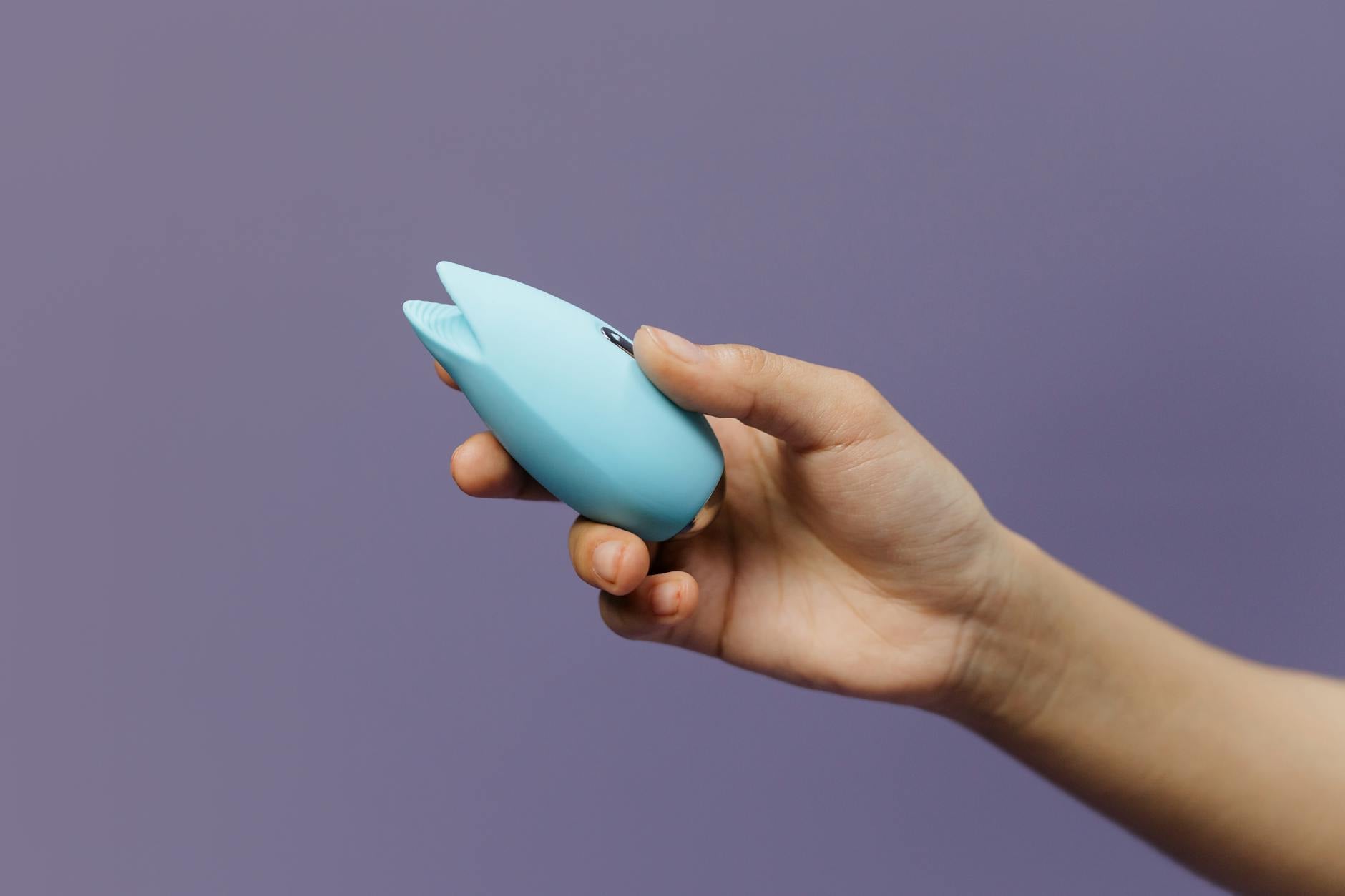
Why Lemon Vibrators Work Best After Pelvic Floor Therapy
Physical therapy trains your pelvic floor to relax and contract with control. A lemon clitoral vibrator becomes dramatically more effective once you have that foundation.
Here's the thing: if you've been doing pelvic floor physical therapy, you've probably noticed something shift. Things feel different down there. Sensation sharpens. Control improves. Maybe penetration stops hurting, or orgasms feel more consistent.
Now you're wondering if a lemon vibrator (or any clitoral vibrator) is finally the right move. The answer is yes, but the timing matters. Combining pelvic floor therapy with a lemon clitoral vibrator isn't just about having better sex. It's about building on what you've already worked so hard to create.
Let me explain why these two things amplify each other, and how to use a lemon sucker when you're in the middle of healing.
Pelvic floor physical therapy isn't what most people think it is. It's not just squeezing your way to a stronger pelvic floor. That's actually a myth that's caused a lot of problems.
A pelvic floor therapist teaches you three things: awareness, strength, and most importantly, relaxation. Many people arrive at therapy with pelvic floors that are chronically tight. They've been gripping from stress, anxiety, or past trauma. Kegels alone won't help if your muscles are already locked.
Therapy retrains your nervous system. Your pelvic floor learns to contract when it's supposed to and release when it's not. Think of it like teaching a muscle to have a conversation instead of screaming.
Once that foundation is in place, sensation improves because relaxed tissue is sensitive tissue. Blood flow increases. Orgasms can feel deeper and more full-body because your pelvic floor isn't unconsciously bracing against pleasure.
That's the window where a lemon vibrator becomes genuinely transformative.
When your pelvic floor is learning to relax, vibration is a feedback tool. It's not that the vibration itself is doing the healing. It's that the vibration is showing your nervous system what that distinction between tension and relaxation actually feels like.
Here's how it works physiologically. Your pelvic floor contains two types of nerve endings: ones that detect pressure and ones that detect vibration. Those vibration-sensing nerves (called Pacinian corpuscles) fire rapidly when exposed to the kind of high-frequency stimulation that a lemon clitoral vibrator provides.
That rapid firing sends a signal up to your brain: "This is relaxed tissue responding to stimulation." Over time, your nervous system learns to associate pleasure with relaxation instead of tension. That's the opposite of what many people with pelvic dysfunction have learned.
The result? Orgasms that feel less like clenching and more like opening. Sensation that's less localized and more diffuse through your whole body. Recovery that happens faster because you're not working against yourself.
Not all stages of pelvic floor therapy are the same. Early on, your therapist might actually recommend avoiding vibration while your nervous system is learning basic awareness. But once you've moved past that initial phase and your therapist has cleared you, here's when to introduce a lemon vibrator.
After week 4-6 of consistent therapy, once you can reliably distinguish between tension and relaxation without the therapist's hands guiding you, start using a lemon clitoral vibrator on lower settings. You're not chasing orgasm. You're reinforcing the pattern.
Use it during moments when you're deliberately practicing relaxation. Set a low intensity. Focus on what it feels like when your pelvic floor is genuinely soft. That awareness is more valuable than the sensation itself at this stage.
Once you're 8-12 weeks into therapy and your therapist says you're in the maintenance phase, you can explore higher intensities and pleasure-focused use. By then your pelvic floor has muscle memory. It knows how to relax even as arousal builds. A lemon vibrator becomes a tool for deepening that skill, not fighting against it.
The mechanics change when you've done the work. Most people without pelvic floor training grip unconsciously during arousal. Your clitoris and surrounding tissue tense up. Blood flow actually decreases because you're fighting against yourself.
After therapy, you've learned a different pattern. Here's how to leverage it:
Start with the lemon vibrator on the lowest setting. Spend 2-3 minutes just noticing sensation without the goal of orgasm. Pay attention to whether your pelvic floor is staying relaxed or if it's starting to grip as arousal builds.
If you notice gripping, pause. Breathe into your belly. Do a quick micro-release (the opposite of a Kegel). Then continue. You're not forcing anything. You're practicing the skill your therapist taught you under a new stimulus.
Gradually increase intensity if you want to. Many people find that after pelvic floor therapy, they need less intensity than they expected. That's because their nervous system isn't bracing. Blood flow is actually reaching the tissue. Sensation is sharper.
If you explore partnered sex, the same principle applies. Your partner benefits from the control and awareness you've built. You can relax around them instead of tightening. That changes everything about penetration, rhythm, and depth.
There are certain pelvic floor issues where a lemon clitoral vibrator or lemon sucker is specifically helpful, not just generally nice.
Anorgasmia or difficulty orgasming. If you've been numb because of chronic tension, pelvic floor therapy wakes things up. A lemon vibrator completes that process by introducing consistent, high-frequency stimulation that your newly-relaxed nervous system can actually process and respond to.
Pelvic pain that's tension-related. If your pain came from gripping, the vibration teaches your nervous system that relaxation and pleasure are linked. You're literally reconditioning the pain response.
Post-childbirth recovery. Pregnancy and birth change your pelvic floor architecture. Therapy helps you relearn how to use what you've got. A lemon clitoral vibrator helps you reconnect with sensation and pleasure during that retraining.
Penetration discomfort. If you've been bracing against penetration, your pelvic floor learned that tension keeps you safe. Therapy unlearns that. A vibrator can help reinforce the new pattern: relaxation allows comfort.
There are moments when using a lemon vibrator or any clitoral vibrator might actually work against your progress.
If you're in the very early stages of pelvic floor therapy and your therapist is still teaching you basic sensation awareness, hold off. Vibration can be overstimulating when your nervous system is already working hard to relearn messages from your pelvic floor.
If you have vaginismus (involuntary tensing during penetration), your therapist might ask you to avoid vibration initially. The goal is to teach your pelvic floor that it doesn't need to protect you. Vibration can sometimes reinforce that protective response too early.
If you're experiencing pain, talk to your therapist before introducing vibration. Not all pain is tension-based. Some is inflammation, some is nerve-related. A good therapist will tell you when the time is right.
The rule: always ask your pelvic floor therapist. They know your specific situation. They've seen where you started and where you are now. They know whether vibration will help or complicate things.
Pelvic floor therapy and tools like a lemon clitoral vibrator are part of the same conversation about reconnecting with your body. They're not solutions in themselves. They're practices.
Therapy teaches you what's possible. A lemon vibrator helps you explore that possibility. The real work is the awareness you're building. That's what sticks.
If you've been in therapy and you've done the work, you've already changed your nervous system. You've taught yourself that your pelvic floor can relax. You've learned what sensation feels like when you're not bracing. A lemon sucker is just the next step in that conversation, not a magic fix.
Many people find that after 3-6 months of consistent practice with a lemon vibrator following pelvic floor therapy, sensation is dramatically sharper than before. Orgasms feel fuller. The whole experience of pleasure becomes less about tension and more about expansion.
That's the goal. And it's achievable. The therapy does the foundational work. The vibrator helps you practice and deepen what you've learned. Together, they create a much faster path to the kind of pleasure and connection you're looking for.
Maybe. It depends on what stage you're at and what your therapist recommends. Early on, when you're learning basic awareness, vibration can distract from that learning. Once you've moved into the practice phase and can reliably relax on your own, a lemon clitoral vibrator on a low setting can reinforce those skills. Always check with your therapist first.
Not directly. Pelvic floor therapy heals on its own timeline, and that's usually 8-12 weeks minimum. What a lemon vibrator does is help you practice and integrate what you're learning. It makes the progress feel more tangible and pleasurable. It doesn't accelerate the physical healing, but it deepens the nervous system retraining.
That depends on the source of your pain. If it's tension-related, a lemon vibrator combined with pelvic floor therapy can be part of the solution. If it's inflammation, nerve pain, or structural, vibration might make it worse. Your pelvic floor therapist or gynecologist can tell you what's causing your pain and whether vibration is safe. Don't guess.
Start low, stay there longer than you think you need to. Most people who've done pelvic floor therapy find they're actually sensitive to lower intensities because their tissue isn't bracing. You might discover you prefer settings 1-3 on a lemon clitoral vibrator, whereas before therapy you would have gone straight to the highest setting. Let your body surprise you.
Not usually in the early stages. Vaginismus is an involuntary tensing response, and vibration can sometimes reinforce that protective reflex before your nervous system has learned it's safe to relax. Your pelvic floor therapist will guide you on timing. Once you've made progress and your therapist clears it, a lemon vibrator on very low settings can help reinforce the new pattern.
No. Pelvic floor therapy works completely on its own. A lemon vibrator is a tool that helps you practice and explore what you've learned. Some people never use a vibrator and do beautifully. Others find that a lemon sucker or another clitoral vibrator helps them integrate the progress faster. It's about what feels right for you.
Pelvic floor therapy changes your nervous system. Once that foundation is solid, introducing a lemon clitoral vibrator is a natural next step. It's not about replacing the therapy. It's about extending it, practicing it, and deepening the skills you've built.
The pleasure you feel with a lemon vibrator after therapy isn't just physical. It's the reward your nervous system gets for learning something new. It's proof that your body can relax and respond at the same time. That's powerful. And it's absolutely worth exploring once your therapist gives you the green light.
Ready to explore what's possible after your pelvic floor work? Start low, stay curious, and trust what your body is telling you. That's where the real transformation happens. If you have questions about how to start or need guidance on your specific situation, reach out to Hello Nancy. We're here to support your journey.