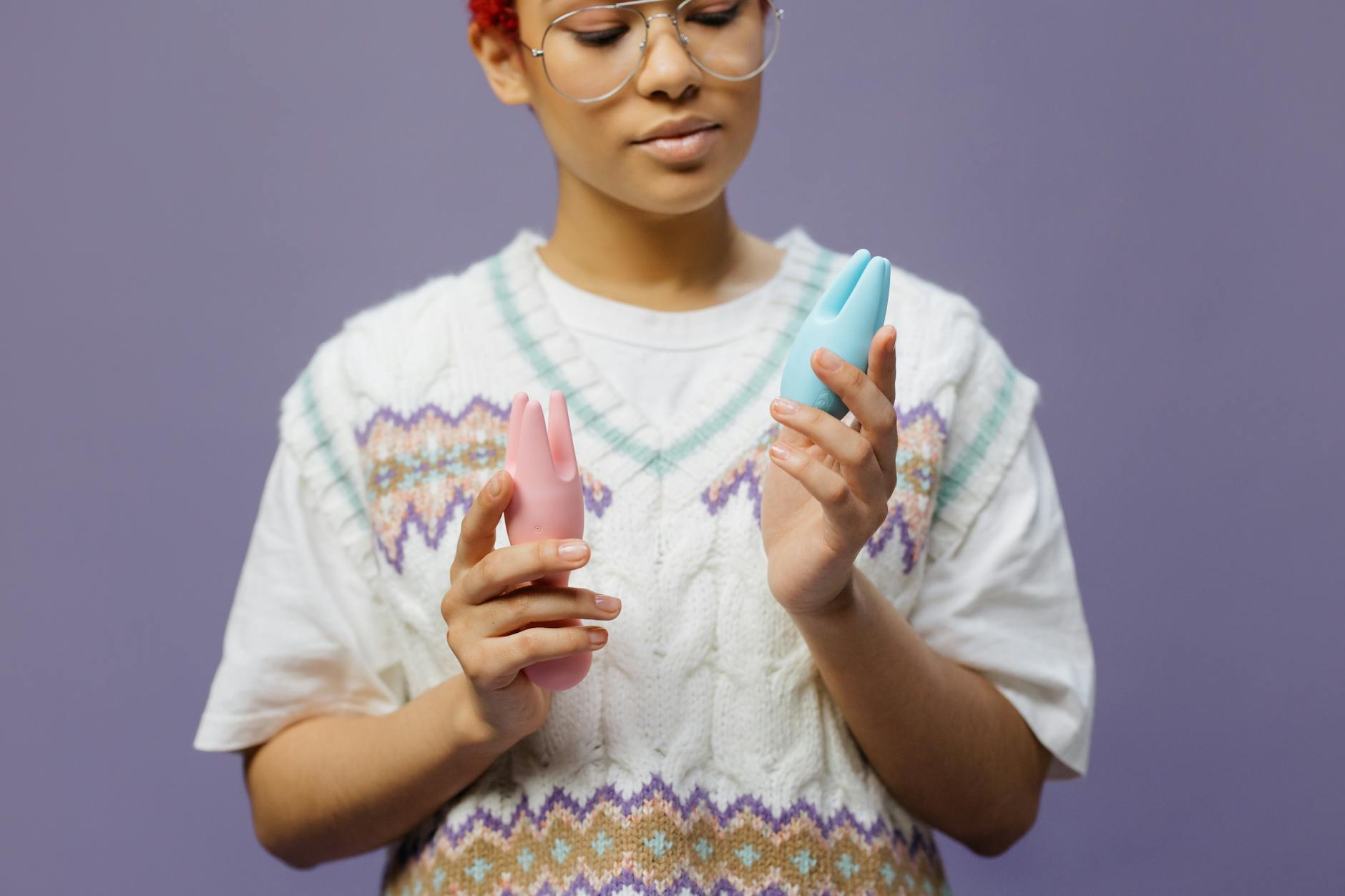
Here's what nobody tells you about orgasm timing
Someone hands you a lemon clitoral vibrator and asks, "How long does this take?" And the honest answer is: it depends on literally everything. Two minutes for one person, twenty for another. Both completely normal. Both completely valid.
The problem is that we've been sold a fiction where pleasure arrives on a schedule. It doesn't. What does matter is understanding the variables that affect how fast you orgasm, so you can stop timing yourself and start actually feeling good.
The myth that ruins everything: the two-minute fantasy
Porn has convinced us that orgasms happen fast. Faster than they actually do for most people. If you've been comparing your real timeline to that impossible standard, no wonder you feel broken.
Research on orgasm duration tells us something different. For people with vulvas, the time between starting stimulation and reaching orgasm typically ranges from five to twenty minutes. Some days it's faster. Some days it never happens, and that's fine too. The lemon sucker design (that air-suction technology) actually speeds things up for many people compared to traditional vibrators because the sensation pattern is unique. But "speeds up" doesn't mean "instant." It means fifteen minutes instead of twenty-five. Still nowhere near the two-minute myth.
Here's the really important part: the faster you try to come, the slower you actually come. Pressure to orgasm literally blocks orgasm. Your nervous system knows the difference between relaxed pleasure and performative rushing. It shuts you down when it feels the latter.
What actually moves your timeline (the real variables)
Arousal level when you start. If you begin using a lemon vibrator when you're genuinely turned on, you're looking at five to ten minutes. If you're starting from cold (just grabbing it because you have fifteen minutes before dinner), add another ten. This isn't a flaw. It's your body being honest about where it is.
Stress and context. A quiet morning with the door locked? Faster. Listening for footsteps? Way slower, or maybe impossible. Your brain is a pleasure organ. When your brain thinks someone might walk in, your clitoris gets the memo.
What's been happening all week. If you've been stressed, disconnected, or touched out, your baseline arousal is lower. That lemon vibrator will work exactly the same technically, but your nervous system needs more runway. Budget more time on high-stress weeks.
Whether you're alone or with a partner. Solo exploration often gets faster results because there's zero performance pressure. You're not thinking, "Is this taking too long?" or "Am I being weird?" or "Are they getting bored?" With a partner, you might need to explicitly say: "This is about me finding what feels good, and it takes the time it takes."
Medication and hormones. SSRIs, birth control, and hormonal fluctuations genuinely change orgasm timeline and intensity. If you're on medication that affects sensation, expecting pre-medication timing is unfair to your body. A lemon clitoral vibrator can still work beautifully for you. It just might take longer, and that's real, not something you're doing wrong.
Your relationship with the tool itself. If you've never used a lemon vibrator before, the first time is partly exploration. You're learning the patterns, figuring out angle and pressure. That learning period might take longer. By the fifth time, your body knows what to expect. Speed increases not because anything changed, but because you're no longer a beginner.
Why the lemon sucker actually does change the timeline
Unlike traditional vibrators, lemon sexual toys (and specifically the suction design of The Lem) work through air-pulse technology rather than direct vibration. This means:
The stimulation pattern is less reliant on direct contact pressure, so people with sensitive clitoral tissue often respond faster. There's less risk of overstimulation, which means you can stay in the pleasure longer without that "too much" shutdown.
The pattern also tends to feel novel to the clitoris. Your body doesn't habituate to it the same way it does with traditional vibration. That novelty can speed up response time.
But here's what hasn't changed: you still need to be somewhat aroused to begin with. A lemon vibrator is not a magic wand that generates desire from zero. It's a tool that works with desire you already have.
The rhythm that actually matters (and it's not speed)
Instead of timing orgasm, focus on rhythm. The patterns on The Lem (whether it's the pulsing rhythm, the suction pattern, or the intensity level) work best when you're not rushing to some invisible finish line.
Many people find that letting themselves stay in the pleasure for ten, fifteen, twenty minutes without a goal actually speeds things up. The relaxation paradox: when you remove the pressure to finish, finishing happens faster.
If you're using a lemon clitoral vibrator with a partner, the rhythm conversation gets interesting. Some couples find that a specific pattern (say, pattern three on medium) becomes their body's signal for arousal. That learned response can genuinely shorten the timeline over time.
When to worry (and when to completely stop worrying)
If an orgasm never happens after thirty to forty minutes of consistent stimulation, it's worth checking in with yourself: Are you actually enjoying this, or are you waiting for the orgasm to validate the experience? If it's the latter, stop. Pleasure that's only about the endpoint isn't actually pleasure.
If you've never had an orgasm with a lemon vibrator or any toy, that's not a timeline problem. It's a "maybe I need a different approach" signal. That could mean a different tool, a different pattern, less pressure, more arousal-building, or talking to a therapist who specializes in pleasure. None of those are failures.
If you used to come faster and now you don't, aging and hormonal changes are real factors. That doesn't make you broken. It makes you someone whose timeline changed. Adjust your expectations and your approach, and often the timeline softens back into comfort.
The conversation with your partner (if you have one)
If your partner is watching the clock while you're using The Lem, that's a partnership problem, not a you problem. The most important conversation isn't about how long it takes. It's about whether you both agree that your pleasure matters even if it takes time.
When that's settled, everything gets easier. You relax. Your nervous system settles. And honestly? That's when timing stops being an issue at all.
FAQ
How long should it take to orgasm with a lemon vibrator if I've never used one before?
First-time use is often slower because you're learning. Budget fifteen to twenty-five minutes for exploration, without the pressure to orgasm. Your body's learning the pattern. By the third or fourth time, you'll likely have a clearer sense of what works, and the timeline will stabilize.
Is it normal if a lemon clitoral vibrator takes longer than my ex-partner's touch?
Completely normal. Different stimulation feels different. A lemon sucker creates a sensation that's unique compared to any hand. Your body might respond faster or slower to that novelty, and either is fine. What matters is whether it feels good, not whether it matches some previous timeline.
Can I use a lemon vibrator and speed up my orgasm if I've been on antidepressants that slow sexual response?
Yes, and no. A lemon clitoral vibrator can absolutely help, and many people report that the unique sensation pattern helps bypass some of the medication-related numbness. But the medication itself is still there. How to Use a Lemon Vibrator When Antidepressants Dull Your Sensation covers this in depth. Expect a longer timeline than pre-medication, and that's not a problem to solve. It's just your new baseline.
What if my partner finishes much faster than I do when we use The Lem together?
This is incredibly common and almost never a real incompatibility. The fix is removing simultaneous orgasm from the goal. Try taking turns. Use The Lem on them first while you're present and engaged, then switch. Or use it solely for your pleasure while they're doing something else pleasurable. Taking turns removes the comparison game, and suddenly both of you relax into your own timelines.
Does the intensity setting on a lemon vibrator affect how fast you orgasm?
Yes, but not always in the direction you'd expect. Higher intensity doesn't always mean faster orgasm. Many people actually find that medium intensity allows for longer pleasure and faster orgasm than maxing out at high. Your clitoris has a pleasure sweet spot. Finding yours is more important than cranking the power.
Is there a way to naturally speed up my orgasm with a lemon sucker without changing anything else?
Relaxation is the answer. Longer warm-up before you start. More foreplay if you have a partner. A clear, locked door if you're alone. Removing any "what if someone hears me" anxiety. These aren't quick fixes. They're the actual fixes. When your nervous system stops bracing, your pleasure speeds up naturally.
Here's what really matters
Orgasm timing is one of those things we obsess over because we've been given impossible benchmarks. The real metric isn't minutes. It's whether the experience feels good, whether you feel safe enough to relax, and whether you're using your lemon clitoral vibrator because you want to, not because you think you're supposed to.
Once that's in place, the timeline becomes almost irrelevant. Some days it's five minutes. Some days it's thirty. Both are completely, totally fine.
If you're still struggling with pleasure or timing, that's what contacting us is for. Sometimes the thing you're trying to solve alone is actually easier with a bit of outside perspective.