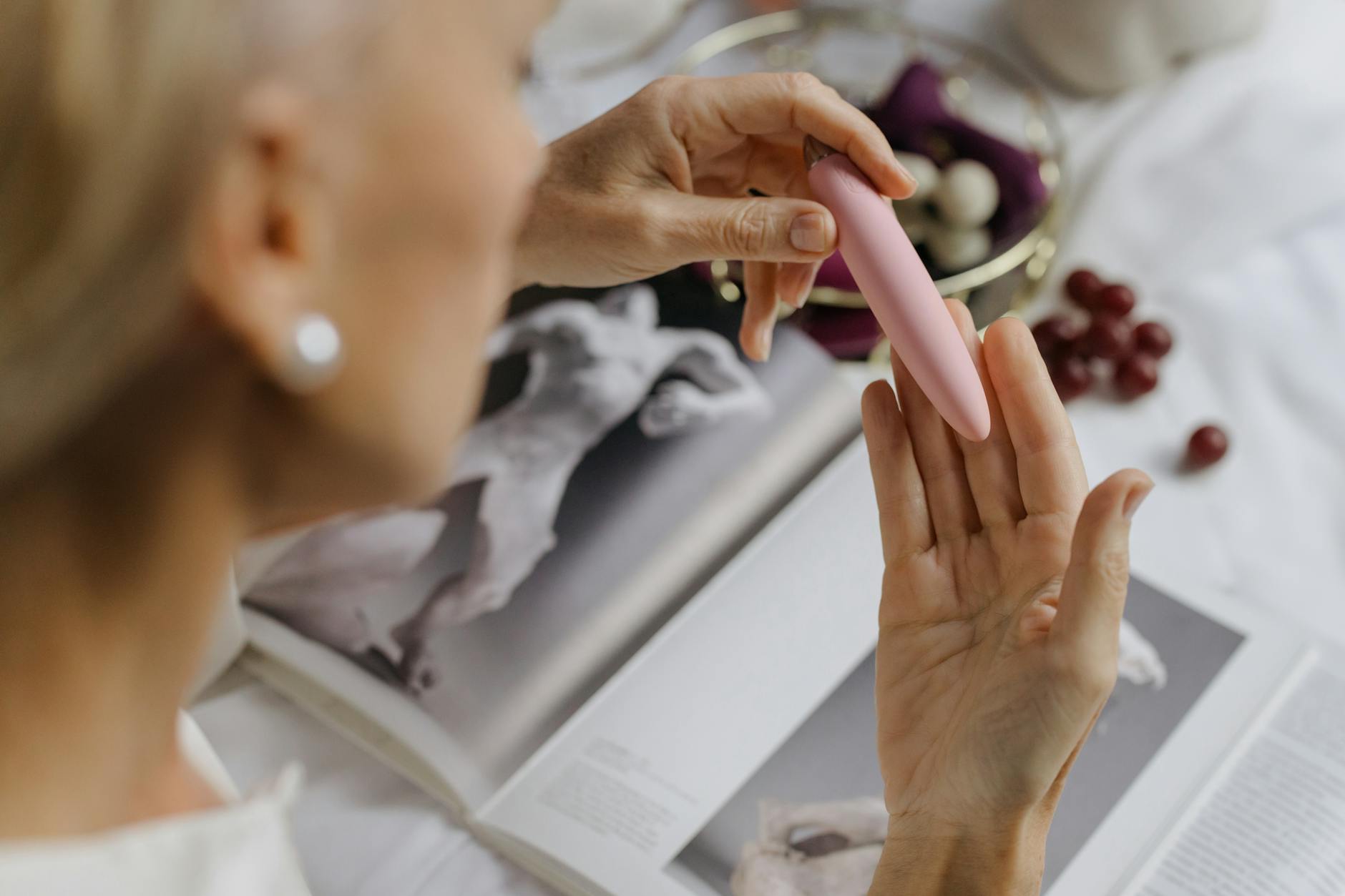
When grief kills desire, your body is doing exactly what it should
Let's start with the fact that no one warns you about. When you're grieving, your nervous system isn't trying to ruin your sex life. It's trying to keep you alive. Grief is a trauma response, and your body downregulates pleasure as part of survival mode. Desire disappears. Orgasms feel impossible or numb. Touch that once felt good suddenly feels intrusive or hollow.
That's not broken. That's your nervous system protecting you.
The problem is that grief also isolates you from one of the few things that can help you actually feel present in your body again. And here's where it gets counterintuitive: gentle clitoral stimulation during grief isn't about having an orgasm. It's about reminding your body that sensation still exists. That you still exist.
Why pleasure gets sidelined when loss happens
When you lose someone, or when life implodes in a major way, your brain diverts resources away from anything nonessential. Pleasure is categorized as nonessential. Your nervous system is busy managing cortisol, adrenaline, and the constant low-level panic that loss creates.
At the same time, your body tenses up. The pelvic floor gets tight. Your skin becomes less sensitive to touch. Some people describe it as feeling numb from the neck down. Others feel hyperaware of physical sensations but can't translate them into pleasure. Everything feels delayed, distant, or wrong.
What's happening is that your prefrontal cortex, the part of your brain that processes pleasure and intimacy, is offline. Your amygdala, the threat-detection center, has taken over. You're not ready for pleasure. You're ready for danger.
But here's the thing: you don't have to wait for grief to finish before your body reconnects with sensation. You can gently invite that reconnection back in while grief is still happening.
How clitoral vibrators actually help during this time
A lemon clitoral vibrator works differently than other stimulation during grief. The suction and pulsing patterns create a specific type of sensation that's gentle but undeniable. Unlike friction or pressure, which can feel overwhelming or intrusive when you're numb, suction pulls your attention to a single point.
That focused sensation can do something counterintuitive: it grounds you. When your mind is spinning in loss, a consistent, rhythmic sensation gives your nervous system something to track besides danger. It's not about pleasure. It's about presence.
Many of my clients who've used a lemon vibrator during grief describe it as feeling like the first time their body felt real again. Not sexual. Just real. Present. Contained in one moment instead of scattered across a year of "what-ifs."
The stimulation also triggers a small release of dopamine, even if you don't reach orgasm. That's not a happy fix. It's a biochemical reminder that your body can still produce neurotransmitters, that sensation is still possible, that you haven't permanently lost the ability to feel.
The practical approach to reconnecting with sensation
If you're interested in using a clitoral vibrator during grief, here's what I recommend to clients.
First, check your expectations. You're not trying to orgasm. You're trying to remember what sensation feels like. If an orgasm happens, that's a bonus. If it doesn't, that's completely normal and doesn't mean anything is broken.
Second, create space that feels safe and private. Grief requires permission to be messy and vulnerable. You need to know you won't be interrupted. This isn't about romantic setup. It's about protection.
Third, start with the lowest intensity setting. Your nervous system is already overwhelmed. The Lem vibrator's lower settings are deliberately designed to build sensation gradually instead of surprising your body with intensity. Let yourself get curious about what you're feeling instead of chasing a particular outcome.
Fourth, use lube. When grief dampens arousal, natural lubrication often disappears. Water-based lube isn't a sign you're broken. It's a tool that removes one layer of friction so you can focus on what's actually happening in your body.
Fifth, set a time limit. Fifteen minutes is enough. Grief requires you to stay functional. You're not disappearing into an hour of pleasure recovery. You're checking in with your body for a brief moment of reconnection. Then you go back to whatever you need to do.
What reconnection actually looks like
In my practice, I work with clients who've experienced major loss. Some describe their first clitoral vibrator session during grief as surprising themselves with tears. Not sad tears. Just release. Their body had been holding so much tension that the gentle vibration loosened it enough for them to cry.
Others describe feeling nothing for the first few times and then gradually noticing tingling sensations, or a slight tightening in their pelvic floor that felt like proof their body was still responsive.
A few describe quiet surprise at a weak orgasm. Not the full-body thing they remembered from before. Just a small contraction that felt like their nervous system saying, "Oh. That's still possible."
All of those are successful reconnections. None of them require intense pleasure or a perfect outcome.
The point is that you're sending your body a message: "I know you're scared. I know you're protecting me. And I'm going to gently remind you that you can still feel good things, even right now."
When you shouldn't use this approach, and what to do instead
If you've experienced sexual trauma or if the loss you're grieving involves someone who harmed you, clitoral vibration might feel triggering instead of grounding. That's important information. It means your body needs a different type of reconnection.
In those cases, I recommend working with a trauma-informed therapist or somatic practitioner before adding any kind of stimulation. Your nervous system is already flooded. Sometimes the kindest thing you can do is give it permission to rest completely instead of pushing toward reconnection too quickly.
Similarly, if depression is part of your grief and you've noticed that you're experiencing anhedonia (the inability to feel pleasure in anything), a vibrator isn't a substitute for professional support. That's a moment to reach out to a therapist or your doctor. Reconnecting with sensation matters, but it's one tool alongside medication, therapy, and time.
The part no one talks about: grief takes months, sometimes years
If you're in the early days of major loss, you might not be ready for this. That's fine. Readiness isn't linear. You might try reconnecting with a lemon vibrator three months in and feel nothing. Then six months later, the same gentle stimulation suddenly opens a door. The timing is unique to you.
What matters is knowing that when you're ready, reconnecting with your body during grief is available to you. It's not indulgent. It's not inappropriate. It's a way of saying to yourself: "I'm still here. My body is still here. And pleasure is still possible for me, even now."
Grief changes you. But it doesn't erase your capacity for sensation or your right to feel good in your body. Sometimes you need a reminder of that. And sometimes that reminder comes from something as simple as a few minutes of gentle, focused touch.
Frequently asked questions
Can using a vibrator during grief make me feel worse?
It's possible to feel worse if you're pushing too hard or using it as a way to escape grief instead of processing it. The goal isn't to feel good. It's to reconnect with sensation. If a vibrator session leaves you feeling more disconnected or numb, that's information. It might mean your nervous system needs more time before that type of reconnection helps. Talk to a therapist if the numbness persists across multiple situations.
Is it normal to feel nothing during the first time?
Completely normal. Your nervous system has downregulated sensation as a survival mechanism. That doesn't reverse overnight. Some clients describe needing five to ten gentle sessions before they start noticing any sensation at all. Patience with your body during grief is radical self-care.
Should I tell my partner I'm using a vibrator to reconnect during grief?
That depends on your relationship and your comfort. Some partners find it helpful to know what you're doing and why, especially if you've been withdrawn or distant. Others keep it private. There's no universal right answer. If you do share, frame it as "I'm trying to reconnect with my body during this loss" rather than a statement about your relationship or their role.
Can I use a lemon vibrator with a partner during grief?
Some couples find that partnered clitoral stimulation during grief actually deepens connection. It requires communication about what you need and readiness for touch that might feel different than it did before loss. Many couples benefit from starting solo before introducing a partner. Check out our guide on using lemon vibrators with your partner when you have mismatched libidos for more perspective on synchronized intimacy during difficult times.
How long does it take to feel "normal" after major loss?
Grief doesn't have a timeline. Your body reconnecting with sensation is one marker of your nervous system stabilizing, but it's not the only one. Some people notice shifts within weeks. Others need months or years. Reconnecting with a clitoral vibrator is a small part of a much larger healing process that also includes therapy, time, community, and self-compassion.
Is there a right way to start reconnecting if I'm feeling completely numb?
Start with the lowest intensity setting on the Lem vibrator and give yourself permission to feel nothing. Numbness is your nervous system protecting you. Gently inviting sensation back in isn't about forcing feeling. It's about slowly signaling to your body that it's safe to feel again. If numbness persists across months and affects other areas of your life, reach out to a mental health professional.
Moving forward: reconnection is not recovery
Using a clitoral vibrator during grief isn't the same as recovering from loss. Reconnecting with your body's capacity for sensation is one small piece of a much longer process. What it does offer is a way to remind yourself that you're still here, that your body is still capable of feeling, and that pleasure is still possible for you even while you're grieving.
Grief changes you fundamentally. But it doesn't have to erase your access to pleasure or presence in your body. Sometimes the most radical act during loss is choosing gentle reconnection, even when everything feels too hard.
If you want to explore this further or need support with your healing process, reach out to us. We're here to help you navigate intimacy during all of life's transitions, not just the easy ones.