
The thing nobody tells you about mismatched libidos
One of you wants sex three times a week. The other wants it once a month. This doesn't mean you're incompatible. It means you're human. Desire naturally fluctuates based on stress, hormones, work, health, age, and about a thousand other variables that have nothing to do with how much you love your partner.
Here's what makes it feel worse than it is: the higher-desire partner often interprets lower desire as rejection. The lower-desire partner feels guilty and pressured. Both people end up anxious, and anxiety tanks libido even faster. You're stuck in a loop where the mismatch itself becomes the problem.
I've worked with hundreds of couples where lemon vibrators actually broke this cycle. Not by magically matching desire. But by removing the stakes from physical intimacy and turning it into something collaborative instead of transactional.
Why mismatched libido happens (and why it's not your fault)
Desire mismatch rarely means one person has stopped caring. It usually means one person's brain chemistry, life circumstances, or body is working differently than the other's.
High-desire partners often have more baseline testosterone or a nervous system that defaults to arousal easily. Low-desire partners might have higher cortisol from work stress, be carrying the mental load of the household, or simply have a sexual response cycle that takes more time to kick in.
The lower-desire partner isn't broken. They're not being distant or withholding. They might legitimately need 30 minutes of foreplay to reach arousal, whereas their partner is ready in five. That's a logistics problem, not a love problem.
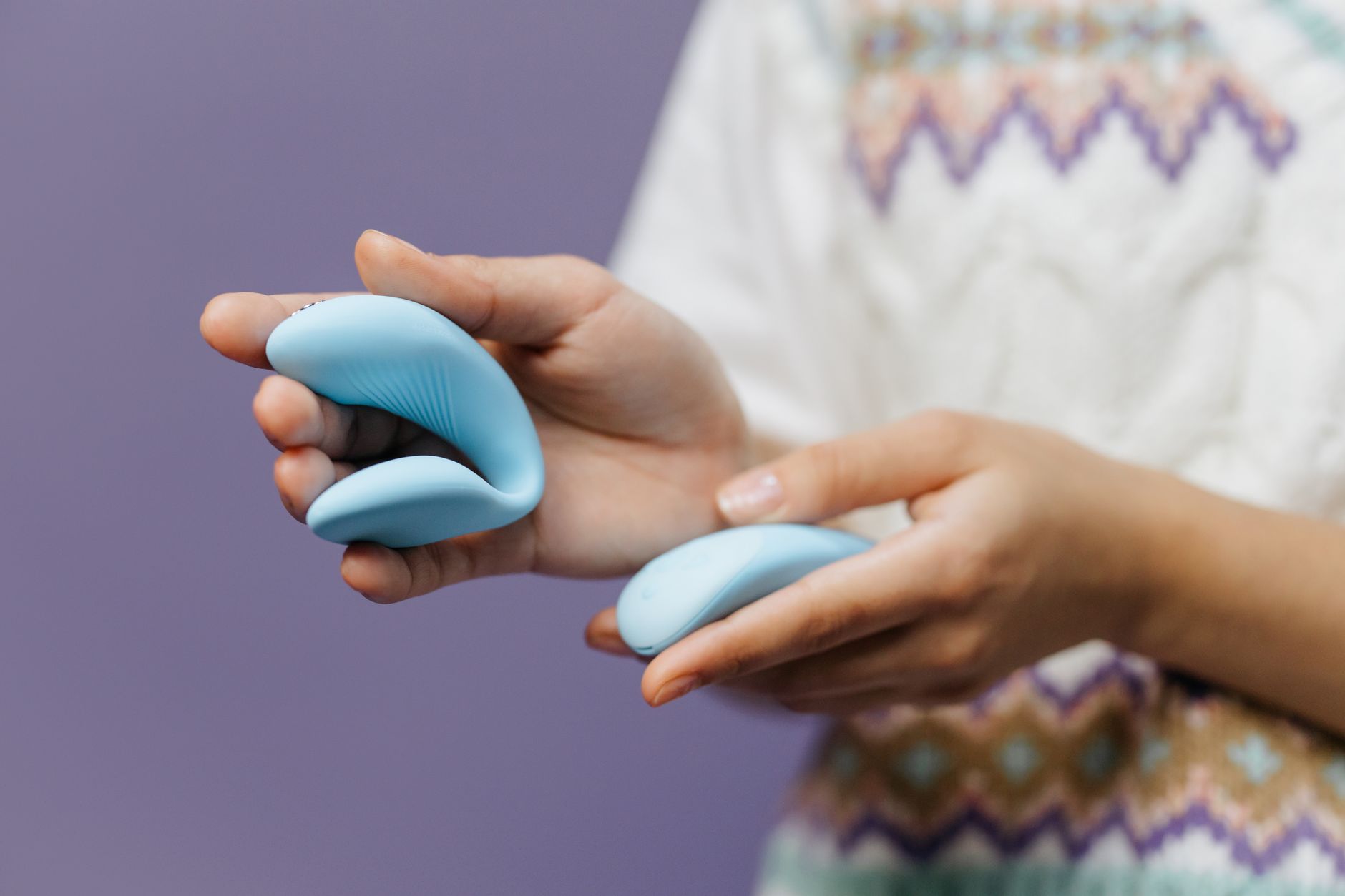
Photo by cottonbro studio on Pexels
The pressure trap: why trying harder makes it worse
When desire mismatches become obvious, the temptation is for one or both partners to try to fix it. The higher-desire partner might initiate more frequently, hoping to spark interest. The lower-desire partner might force enthusiasm, trying to meet their partner halfway.
Both approaches backfire immediately. More initiations feel like pressure. Forced enthusiasm feels fake. Both erode the emotional safety that actually makes desire sustainable.
This is where a lemon vibrator changes the dynamic. Instead of "I want sex, you don't, this is a problem," the conversation becomes "We both want to feel connected. Let's figure out what that actually looks like for us."
Clitoral vibrators, especially suction-based ones like The Lem, work well for this specific conversation because they shift the focus from partnered sex to partnered pleasure. Your partner isn't performing. You're not performing. You're both witnessing sensation and connection together.
What to actually say when you bring this up
Honestly though, this conversation is harder than buying the toy. You can't just drop a lemon vibrator on the nightstand and expect things to improve.
Start with curiosity, not blame. "I've noticed we're not connecting physically as much as we used to" is different from "You never want sex with me." The first opens a dialogue. The second closes it.
Then name what you're actually looking for. "I miss feeling close to you. I'm wondering if there's a way we could explore pleasure together that feels good for both of us, even if we don't always want the same thing at the same time."
This reframes mismatched desire as a shared problem you're solving together instead of evidence that something's broken in the relationship.
If your partner seems defensive, it helps to normalize it further: "Desire fluctuates for everyone. I'm not asking you to want more sex. I'm asking if we can experiment with what connection looks like when we're both ready."
How to actually use a lemon vibrator together when desire is mismatched
The mechanics look different depending on your specific dynamic. Here are three common scenarios.
Scenario 1: You want more sex than your partner. You initiate, your partner isn't quite there yet. Instead of dropping it or pushing, try this: "Can we spend 20 minutes together just exploring? No pressure to have sex. Just touch and sensation."
Use a lemon clitoral vibrator on yourself while your partner watches or touches you. They're present, engaged, but not performing. Many lower-desire partners find watching their partner experience pleasure actually creates desire in real time. It's not about forcing arousal. It's about creating the conditions where it might naturally emerge.
Scenario 2: Your partner wants more than you, and you feel guilty. The guilt is the real problem here. Stop trying to want more. Instead, create structure that removes guilt from the equation.
Try this: "Once a week, let's have a connection night. It might be sex, it might not be. But it's time we've agreed on, and I'll be fully present." On those nights, using a lemon vibrator together can feel less like "we have to have sex" and more like "we're spending time on pleasure together."
Your partner gets consistent connection. You get predictability and no surprise pressure. The lower desire almost always rises when the guilt drops.
Scenario 3: You're both lower desire right now. Life is hectic. Stress killed your libidos equally. Use a lemon vibrator as a way to gently restart the conversation about pleasure without making it feel urgent or obligatory.
This is actually the easiest mismatch to fix because you're not fighting each other's rhythms. You're just reconnecting. A clitoral vibrator can be the physical anchor that says "let's remember what this feels like together."
Why suction-based vibrators work better for couples with desire gaps
Traditional vibrators prioritize intensity. Faster, harder, more stimulation. If one partner is high-desire and results-focused, they might use it that way. If the other partner is lower-desire and needs gentleness and time, that intensity feels overwhelming.
Lemon vibrators use suction instead of vibration. The sensation is completely different. It's less about pushing and more about pulling, which many people describe as feeling more like sensation and less like performance. You can control intensity precisely, which means both partners can find their rhythm in the same session.
For couples, this means you can use the same toy in completely different ways without it feeling like a compromise. Your partner might use it on the lowest setting for 20 minutes. You might switch to a higher setting after. There's flexibility built into the design.
This matters psychologically too. If you're using The Lem together, it's not "your toy" or "their toy." It's a shared object that serves both of you. That distinction sounds small. It's not. It changes how couples talk about pleasure and desire.
The conversation after: making it actually stick
Using a lemon vibrator together once is nice. Using it regularly is how you actually change the dynamic.
After your first time, check in. Not "Did you like it?" but "How did that feel? What worked? What didn't?" This isn't performance review. It's collaborative problem-solving.
Lower-desire partners often report that this kind of exploration actually increases desire over time. Not because they're being manipulated into wanting more sex. But because sex stops feeling like something their partner needs and starts feeling like something they both choose.
Higher-desire partners consistently say that sharing this kind of pleasure, even if it's not always penetrative sex, actually satisfies the underlying need better than more frequent conventional sex would. You wanted connection, not just orgasm. A lemon vibrator delivered that.
When you should see a couples therapist instead
If the desire mismatch is paired with resentment, contempt, or complete emotional distance, a toy isn't going to fix it. That's when you need a licensed relationship therapist who specializes in couples work.
But if the mismatch exists in an otherwise strong relationship, if you both want to bridge the gap and you're just stuck on logistics, a lemon clitoral vibrator can be the physical conversation starter that gets you moving.
The real work: staying connected when desire fluctuates
Mismatched libido doesn't resolve. It adapts. Over a long relationship, you'll cycle through periods where desire matches, mismatches, and matches again. That's normal. The couples who navigate this well aren't the ones with perfectly matched libidos. They're the ones who stopped treating desire mismatch as a sign of incompatibility.
Using a lemon vibrator together is one tool in that larger conversation. It works because it takes the performance pressure off physical intimacy and replaces it with curiosity. You're not trying to want the same thing at the same time. You're trying to stay connected while you're different.
That's the actual work. The toy just makes it easier to start.
People also ask
Can using vibrators together actually increase desire in the lower-desire partner?
Sometimes, yes. But not through magic. What happens is the lower-desire partner usually has lower desire because sex feels obligatory or pressured. When you remove that pressure and reframe physical connection as collaborative exploration, nervous systems relax. Relaxation is literally a prerequisite for arousal. So the vibrator isn't creating desire. It's removing the obstacles that were blocking it.
What if my partner feels threatened by a lemon vibrator?
That usually means the vibrator feels like a replacement rather than a tool. Reframe it. "I want this to help us both feel good together, not replace you." You might also explain that clitoral stimulation and partner contact activate different pleasure pathways. A lemon vibrator on the clitoris while your partner is inside you, or touching you elsewhere, isn't either-or. It's both.
Is it weird to use a lemon vibrator with someone when you don't have matching desire?
It would be weird if you were both forcing enthusiasm. But if you're being honest about mismatched desire and curious about what works for both of you, it's actually one of the most honest things you can do. You're saying "Our bodies work differently. Let's explore that instead of pretending they don't."
How often should we use a lemon vibrator together if we have mismatched libidos?
There's no magic frequency. Start with whatever feels natural. Once a week, once a month, whenever you both feel like reconnecting. The goal isn't quantity. It's consistency and presence. A scheduled connection night once a week where you're both fully engaged beats random, pressured attempts three times a week.
Does using vibrators together actually improve a relationship with desire mismatch?
It can. But only if you're willing to have the harder conversation underneath. The vibrator is permission to talk about desire differently. It's a physical object that says "we're going to explore pleasure on terms that work for both of us." That conversation, not the toy itself, is what actually changes things.
What if one partner wants to use a lemon vibrator and the other refuses?
That's valuable information. The refusal usually isn't about the toy. It's often about feeling unsafe, unseen, or defensive about the desire mismatch itself. That's when you pause the vibrator conversation and get curious about what's underneath. Sometimes couples therapy helps. Sometimes it just takes time and reassurance. But forcing a vibrator into a relationship where there's underlying conflict will make things worse, not better.
Start with how to introduce lemon vibrators to your partner without awkwardness if you're still building trust around the conversation. And if the mismatched desire is paired with deeper disconnection, how to use a lemon vibrator when rebuilding intimacy after relationship conflict walks through the longer repair process.
Mismatched desire is one of the most common challenges long-term couples face. It's also one of the most solvable. The Lem Clit Toy and honest conversation about what pleasure actually looks like for both of you can transform how you navigate this together.
If you're stuck on how to start the conversation or what tools might help, reach out. We're here to help you reconnect.