
The pressure that kills arousal
Let's be real. Sometimes the person closest to you becomes the biggest obstacle to your own pleasure. Not because they're cruel or intentionally selfish, but because the dynamic has calcified into something that feels more like a performance than an experience. You're tracking their satisfaction, their timeline, their preferences. Your own arousal gets footnoted.
This is the pressure that works in slow motion. It doesn't announce itself as a problem until you realize you can't get wet, can't focus, or can't orgasm when they're watching. Then everything gets worse. The harder you try, the further away pleasure moves.
Why clitoral suction changes the equation
Here's the thing about a lemon clitoral vibrator or any air-suction device: it's not about the toy itself. It's about what the toy does to the dynamic. When you're using The Lem, you're not waiting for your partner's rhythm. You're not adjusting to their pressure preferences. You're not performing arousal while secretly feeling numb.
You're in control. Completely. And that shift in power often rewires the entire experience.
Many of my clients find that using a lemon vibrator solo first is transformative. Not because partnered sex becomes irrelevant, but because solo exploration reminds your body what genuine arousal feels like. You remember your own pleasure before anyone else's expectations colonize it.
The solo practice that rebuilds sensation
If partner pressure has killed your arousal, start here:
Week one: exploration without performance. Use The Lem on the lowest setting (pattern 1 or 2) for 15-20 minutes with zero expectation of orgasm. The goal is sensation, not outcome. Notice what feels good. Notice when you tense up. Notice when pleasure actually arrives, even if it's mild.
Week two: add breathing. Same setup, but now pay attention to your breath. Most people hold their breath under pressure, which literally shuts down arousal. Practice breathing deeply through your belly while using the vibrator. Exhale longer than you inhale. This signals safety to your nervous system.
Week three: experiment with patterns and speed. Now that you know what baseline feels good, try moving through the settings. Don't chase the fastest or most intense. Find the rhythm that makes your body feel most awake, most present.
The goal here isn't a trophy orgasm. It's reconnection with what your body actually wants, separate from what you think you should want or what anyone else expects.
What changes when you rebuild solo pleasure
Something shifts when you've had your own good orgasms, on your own terms, with your own device. Three things happen consistently.
First, your confidence returns. You know your body works. You know what pleasure feels like. That knowledge is bulletproof against someone else's impatience or criticism.
Second, the shame dissolves. Partner pressure often comes wrapped in shame: "What's wrong with me that I can't come?" or "Why do I need a toy?" Using a lemon clitoral vibrator solo teaches you that wanting what you want is normal, healthy, and worth taking time for. No apologies required.
Third, and this is crucial: you become a better partner. When you're no longer performing pleasure or managing your partner's feelings about your arousal, you're actually available for connection. Paradoxically, stepping back into solo play often makes partnered sex better, not worse.
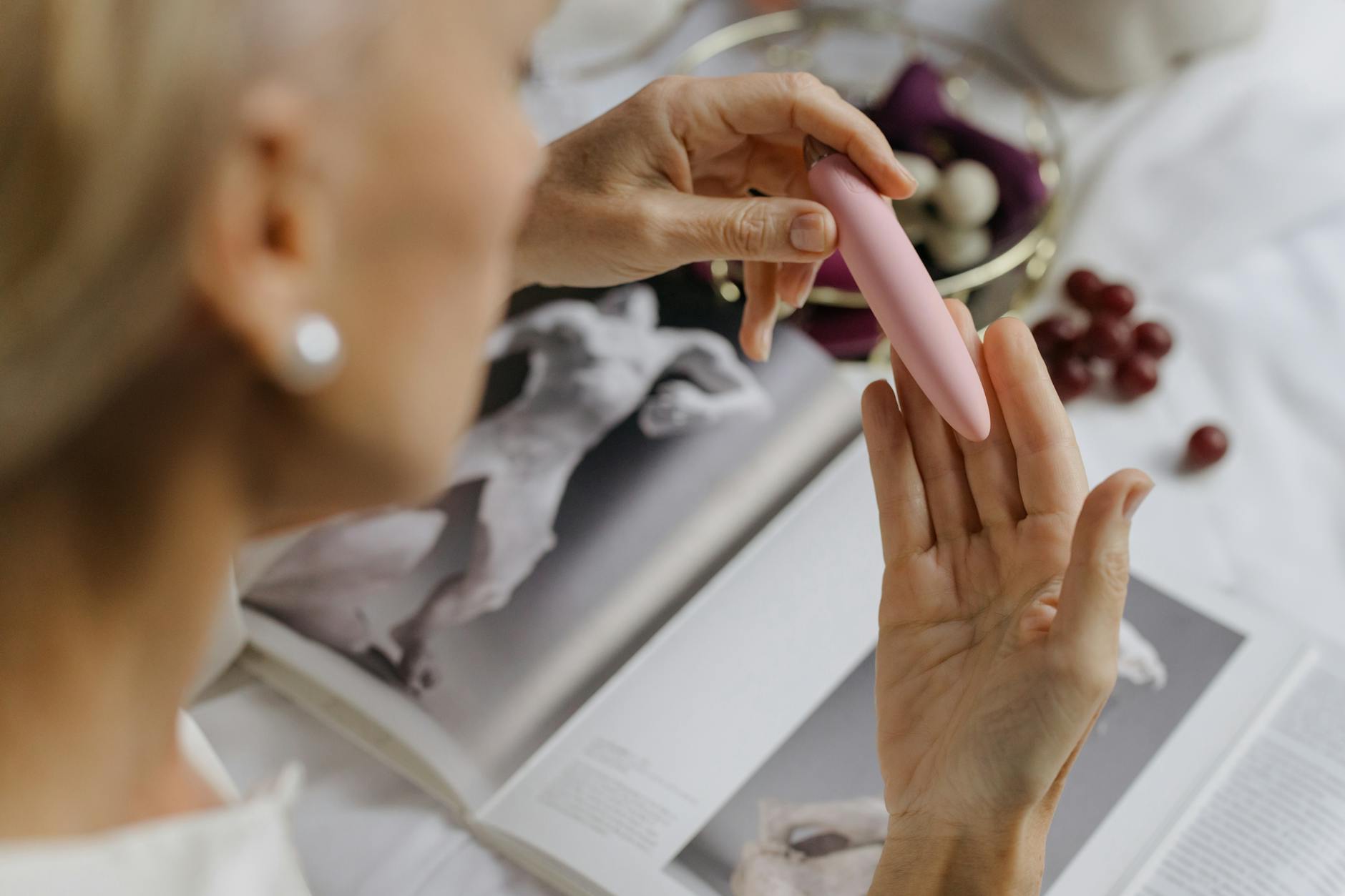
Photo by cottonbro studio on Pexels
Bringing the tool into partnered space (carefully)
Once you've rebuilt your relationship with your own pleasure, introducing The Lem to partnered sex becomes easier. But the framing matters.
Don't position it as a fix for a broken system. Don't say "I need this because you're not doing it right." That will trigger defensiveness, and you'll end up back in the pressure dynamic, just with a vibrator in the middle.
Instead, try: "I found something that feels really good when I'm alone, and I'd like to try it with you here." That's a completely different conversation. One is about adding pleasure, not subtracting their role.
Some partners will be genuinely excited. Some will feel insecure. Both reactions are normal. If your partner gets defensive about a lemon clitoral vibrator, that tells you something important about the underlying dynamic that a toy won't fix. That's couple's therapy territory, not a product question.
When introducing a lemon vibrator into partnered time, set clear boundaries. You might use it while they're present but not touching you. Or you might use it as foreplay before partnered sex. Or you might use it and have them watch. You decide. That autonomy is the whole point.
The partner who doesn't understand
Sometimes you'll explain this to your partner and they still won't get it. They'll say things like "Isn't my touch enough?" or "Why do you need a toy if you're with me?"
Those questions sound innocent. They're not. They're requests for you to center their feelings over your own pleasure. And that's the exact pressure you're trying to escape.
You can explain the neuroscience of clitoral stimulation. You can say how long it takes to orgasm with a lemon vibrator compared to partnered touch. You can point out that lemon clitoral vibrators feel different than traditional vibrators precisely because they work with your body's natural response patterns.
But honestly, sometimes education doesn't work because the real issue isn't ignorance. It's control.
If your partner refuses to support your solo pleasure, refuses to accept that clitoral vibrators are legitimate tools, or makes you feel shame for wanting them, that's not a sex problem. That's a relationship problem. And it might be worth exploring how to rebuild desire after relationship patterns have eroded your trust.
The nervous system piece nobody talks about
Partner pressure doesn't just create emotional friction. It creates physiological shutdown. When you're anxious about someone's expectations, your sympathetic nervous system stays activated (fight or flight). Arousal requires the opposite: a parasympathetic state (rest and digest).
You literally cannot orgasm when you're nervous. Your body won't allow it. That's not a flaw. That's a safety mechanism.
Using a lemon vibrator solo rewires this. When you know you're alone, there's no performance. Your nervous system downshifts. Arousal becomes possible. Your body learns that safety plus stimulation equals pleasure. That's a teaching moment your nervous system won't forget.
When you eventually bring partnered intimacy back, your body has a template for what pleasure actually feels like. You're less likely to ghost through the experience or disconnect to manage someone else's needs.
When to call in outside help
If partner pressure around sex is making you depressed, anxious, or resentful, or if it's part of a larger pattern of your needs being dismissed, talk to a therapist. Alone first, then potentially as a couple.
A lemon clitoral vibrator is a tool for exploring your own pleasure. It's not a stand-in for a functional relationship. If the relationship has deeper problems, the vibrator will help you remember what you deserve, but it won't fix the underlying issue.
The Lem can help you reclaim your body. But your nervous system and your emotional safety matter more than any device ever will.
The permission you actually need
Here's what I tell every client working through partner pressure: your pleasure is not a negotiation. It's not something you earn by being a certain way in the bedroom. It's not something you owe your partner or that your partner owns.
It's yours. It belongs to you. Using a lemon sexual toy, using The Lem, taking solo time, exploring what feels good without an audience.these are all acts of reclamation.
Partner pressure fades when you stop asking for permission. Solo play with a clitoral vibrator isn't selfish. It's self-preservation. It's remembering that your arousal, your orgasm, your pleasure has value independent of whether it serves someone else's satisfaction.
Start small. Start alone. Use the lowest setting. Breathe. Notice what your body wants without an audience. That's where the real shift begins.
People also ask
Can using a clitoral vibrator alone damage your relationship?
Not inherently, but it depends on the dynamic. If your relationship is secure and your partner respects your autonomy, solo play often strengthens things by relieving pressure on partnered sex. If your partner sees any solo pleasure as a threat, that's a sign the relationship has control issues that go beyond the bedroom. In that case, the vibrator doesn't cause the problem. It just reveals it. Many people find that solo exploration with a lemon vibrator becomes the catalyst for honest conversations they needed to have anyway.
How do I explain to my partner why I need a lemon vibrator if they feel insecure?
Frame it around your pleasure, not their inadequacy. "I discovered something that helps my body relax and feel good" is different from "You're not doing it right." If they're still insecure, that's worth exploring in therapy. A secure partner can handle the fact that your body responds differently to different types of stimulation. If yours can't, that's information about your relationship, not about whether you should use the vibrator. You should.
Does using a lemon clitoral vibrator make it harder to orgasm with a partner?
The opposite, usually. Once your body remembers what genuine arousal feels like, you're more likely to achieve it in partnered scenarios because you know the difference between performing and actually being present. Some people find that they need a vibrator during partnered sex, and that's completely fine. Your partner's touch and a lemon vibrator can coexist in the same experience.
What if my partner wants to be involved in my solo play?
That's your choice. Some people find it helpful to have a partner present but not directly controlling the device. Others prefer true privacy and then share the results. There's no single right answer. The key is that you decide what feels safe, and your partner respects that boundary. If they try to take over the vibrator or push the experience toward their satisfaction, that's boundary-violating. Stop and renegotiate.
Is it normal to feel guilty about using a vibrator instead of relying only on partner touch?
Completely normal, especially if you've internalized the message that wanting things outside your partner's body is somehow disloyal. It's not. Your nervous system and your pleasure responses are yours alone. No partner can fully control either one, and you shouldn't expect them to. A lemon sexual toy is a tool, not a replacement. Using one is self-care, not infidelity.
How long does it take to rebuild pleasure after partner pressure has killed arousal?
It varies. Some people feel a shift within a week or two of solo exploration. Others take months to fully trust their own sensation again, especially if the pressure was longstanding. The timeline also depends on whether the underlying relationship dynamic changes. If your partner continues to criticize your pleasure, rebuild will be slower. If you establish firm boundaries around your solo time, it accelerates. Patience with yourself matters more than speed.