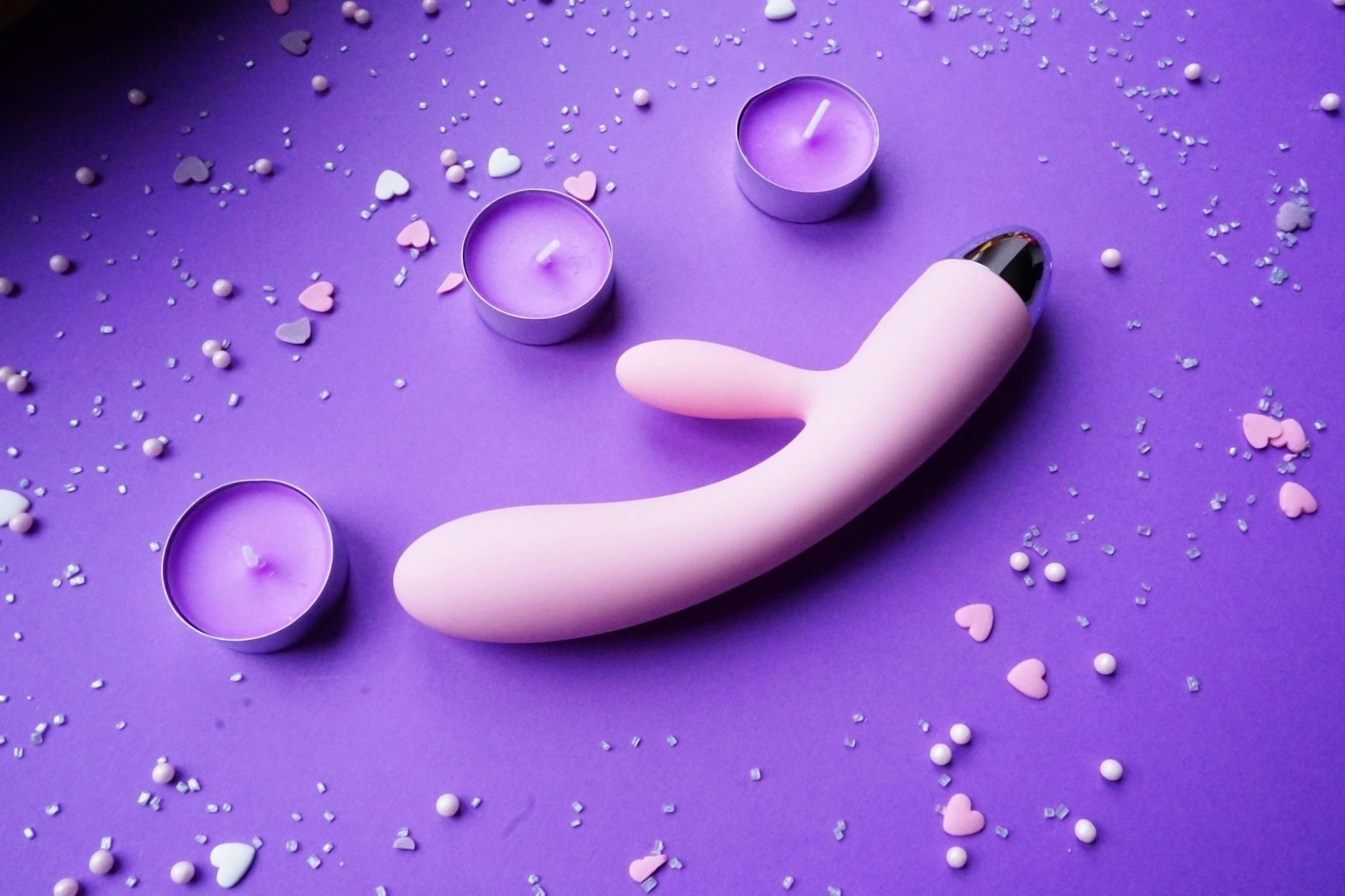
How to Use a Lemon Vibrator When Partners Are Reconnecting After Time Apart
When months or years of distance have changed the rhythm of your intimacy, rebuilding pleasure takes intention, honesty, and tools that reset the conversation.
Let's be real: when partners reconnect after months or years apart, the first time back together is rarely the fever dream you imagined. Your body remembers arousal, sure. Your emotional maps remember each other. But the actual mechanics of pleasure together? That requires a reset.
This is not a problem to solve. It's a conversation to have with your body and with your partner, and it's one where a lemon clitoral vibrator becomes less a toy and more a translator.
Separation changes things physiologically. When you haven't been intimate with a partner for months, your nervous system recalibrates. Your body doesn't stay in a state of readiness for someone who isn't there. Arousal becomes slower to access. Touch feels unfamiliar even when it's familiar. You might experience what looks like lower desire, but it's actually your system asking for a slower warm-up.
Beyond the physical piece, there's the psychological layer. If the separation involved difficulty, grief, or complicated logistics, your brain might be protecting itself. Pleasure requires a kind of surrender, and surrender is harder when trust has been tested by distance.
The good news: none of this means your connection is broken. It means you're both starting fresh, and fresh is actually an opportunity.
I recommend couples talk through three things before reconnecting sexually. Use these as actual questions, not assumptions.
First: what's changed about your body? Maybe one of you gained weight, lost muscle, experienced hormonal shifts. Maybe one of you is on new medication. Maybe you're both just different versions of yourselves. Name it. Not as criticism, but as information. Your partner's body might respond differently now, and they need to know you see that.
Second: what's changed about your arousal? Is it slower? Faster? Does it come from a different place? If you've been apart long enough, your actual arousal patterns might have shifted. That's not weird. That's just what happens when your body recalibrates.
Third: what are you nervous about? Performance anxiety, body insecurity, fear of disappointing each other. Saying it out loud defuses it.
These conversations feel awkward because we're taught that good sex should be intuitive. It isn't. Good sex after time apart requires words.
A lemon sexual toy works for reconnecting couples for one clear reason: it removes the pressure of bilateral arousal happening at the same pace.
When you're rebuilding after separation, one partner often gets there faster than the other. Maybe the person who stayed has been managing solo pleasure. Maybe the person returning hasn't accessed their arousal in months. A clitoral vibrator lets one of you arrive at pleasure while the other watches, participates, or gets there on their own timeline. That takes the performance pressure off entirely.
The suction mechanism of a lemon vibrator also works beautifully here because it doesn't require the same kind of coordinated rhythm as manual stimulation. You're not trying to sync up. You're simply creating concentrated sensation, which builds arousal faster and more reliably. That matters when you're both nervous.
Start with a longer warm-up window than you might think you need. I'm talking 20-30 minutes minimum. This isn't foreplay in the traditional sense. This is your nervous systems remembering each other.
Begin fully clothed. Touch through fabric. Remind your hands what your partner feels like. If the separation involved difficult circumstances, your body might be holding onto that tension. Slow touch through clothing can help your nervous system recognize safety before you go further.
When you do undress, one partner uses the lemon vibrator solo while the other watches, touches them, or is nearby. This serves two purposes: it gets the receiving partner to arousal, and it gives the other partner permission to not be "performing" yet. You're observing. You're present. You're not expected to have simultaneous orgasms.
If both of you want penetration afterward, now you have an easier time. One of you is already aroused, relaxed, and ready. The other can focus on their own arousal without managing someone else's timeline.
When partners reconnect after separation, emotions surface. You might feel grief about the time you missed. You might feel anger about why you were apart. You might feel vulnerable about your body or your arousal.
These feelings are welcome. They belong here. But they can hijack pleasure if you're not watching for them.
If you notice yourself shutting down during intimacy, pause. Not to fix it immediately, but to name it. "I'm feeling something I need to sit with for a second." Your partner gets to know what's happening in your body. Then you decide whether to continue, take a break, or shift what you're doing.
A lemon vibrator actually helps here too because it gives you something concrete to focus on when emotions get big. Instead of managing a partner's arousal and your own feelings simultaneously, you have one job. That's grounding.
If one of you is nervous about being vulnerable again, that shows up in the body as tension. You might notice yourself unable to relax enough for arousal to build. Or you might get aroused and then suddenly freeze.
This is where I recommend starting with solo pleasure. Use the lemon vibrator by yourself while your partner is in the room, talking to you, touching non-genital parts of your body. Your partner's presence reminds you that you're safe with them. Their voice grounds you. And you get to experience arousal without the pressure of reciprocating.
Many couples find that after two or three times of this, the nervous partner's system relaxes enough to try partnered touch. But there's no rush. Rebuilding after separation isn't a race.
Here's something I tell couples who've been apart: sometimes the reconnection sex is better than it was before. Not because you've changed fundamentally, but because you're doing it differently.
You're slower. You're more communicative. You're not taking each other's presence for granted. You're watching each other experience pleasure instead of just having simultaneous experiences. That shift in attention? It creates a different kind of intimacy.
The lemon clitoral vibrator becomes part of that story. It's not making up for time lost. It's saying out loud that you're both committed to figuring this out together.
What if one of us wants to use it and the other doesn't? That's fine. A lemon vibrator is a tool for whoever wants to use it. If your partner prefers to build arousal other ways, that's valid. The point is you're rebuilding, not replicating what came before.
Does using a vibrator mean we're not connecting? No. If anything, it's the opposite. You're being intentional about pleasure instead of assuming it will happen automatically. That's deeper connection, not less.
What if we still feel awkward? Awkwardness is normal. Keep talking. Keep touching. Keep showing up. Some couples need six months of intentional reconnection before it feels natural again. That's not a failure. That's rebuilding.
Reconnecting after time apart is one of the harder transitions couples navigate. You're not starting from scratch, which sounds easier but actually isn't. You're carrying memory and history and maybe some pain from the separation itself.
Take your time. Use lemon vibrators and other tools designed for slower arousal as permission to move at the pace that actually works. Check in with your partner frequently. Celebrate small moments of connection. Understand that rebuilding pleasure is part of rebuilding trust.
If the distance has created bigger relationship fractures beyond the physical, consider working with a relationship therapist. Someone who specializes in partners navigating different arousal speeds can help you map out what reconnection actually means for your dynamic.
Your pleasure matters. Your partner's pleasure matters. The time you take to rebuild both of those things together matters more than speed.
There's no standard timeline. Some couples reconnect emotionally and physically within weeks. Others need several months of intentional rebuilding. The key is checking in with each other about readiness rather than assuming you should be "back to normal" by a certain date. Pressure to move faster than feels authentic actually slows reconnection down. Go at your pace.
Completely normal. Attraction requires proximity and consistent emotional connection. When those are absent for months, your nervous system recalibrates. You're not losing your partner. You're just experiencing what happens when routine intimacy stops. Rebuilding attraction is entirely possible and often stronger after you've intentionally reconstructed it.
There's no "should" here. Some couples benefit from reconnecting emotionally first through touch that isn't sexual. Others find that sexual reconnection helps them feel safe with each other again. Talk about what feels right for both of you. If one of you wants to wait and the other wants to move forward, that's a conversation, not a dealbreaker.
Yes, because it removes the pressure of simultaneous arousal and performance. If your partner is nervous about being vulnerable again, watching you experience pleasure with a tool can help them feel less responsible for "making it work." It also gives them a job (being present, touching you, talking to you) that feels manageable while you build arousal. That often eases insecurity.
In some ways, you are starting over. And that's actually an opportunity. You get to discover what pleasure looks like now, with your current bodies and current lives. You get to build communication skills you might not have had before. You get to move slower and more intentionally. That's not a loss. That's a reset that many couples wish they'd had.
Bring it up in conversation, not during sex. Something like: "I read that some couples find lemon clitoral vibrators really helpful when they're rebuilding after time apart because there's no pressure to sync up." You're naming the tool and the benefit separately. If your partner is interested, great. If not, you've planted the idea and can revisit it later. The conversation itself matters more than the toy.
When partners reconnect after separation, pleasure isn't something that happens automatically. It's something you rebuild together, and rebuilding requires honesty, patience, and willingness to do things differently. A lemon vibrator becomes part of that conversation. It's not about replacing what was missing. It's about creating something that works for who you both are now.
If you want to talk through what reconnection looks like for your specific relationship, get in touch. I work with couples navigating exactly this transition.