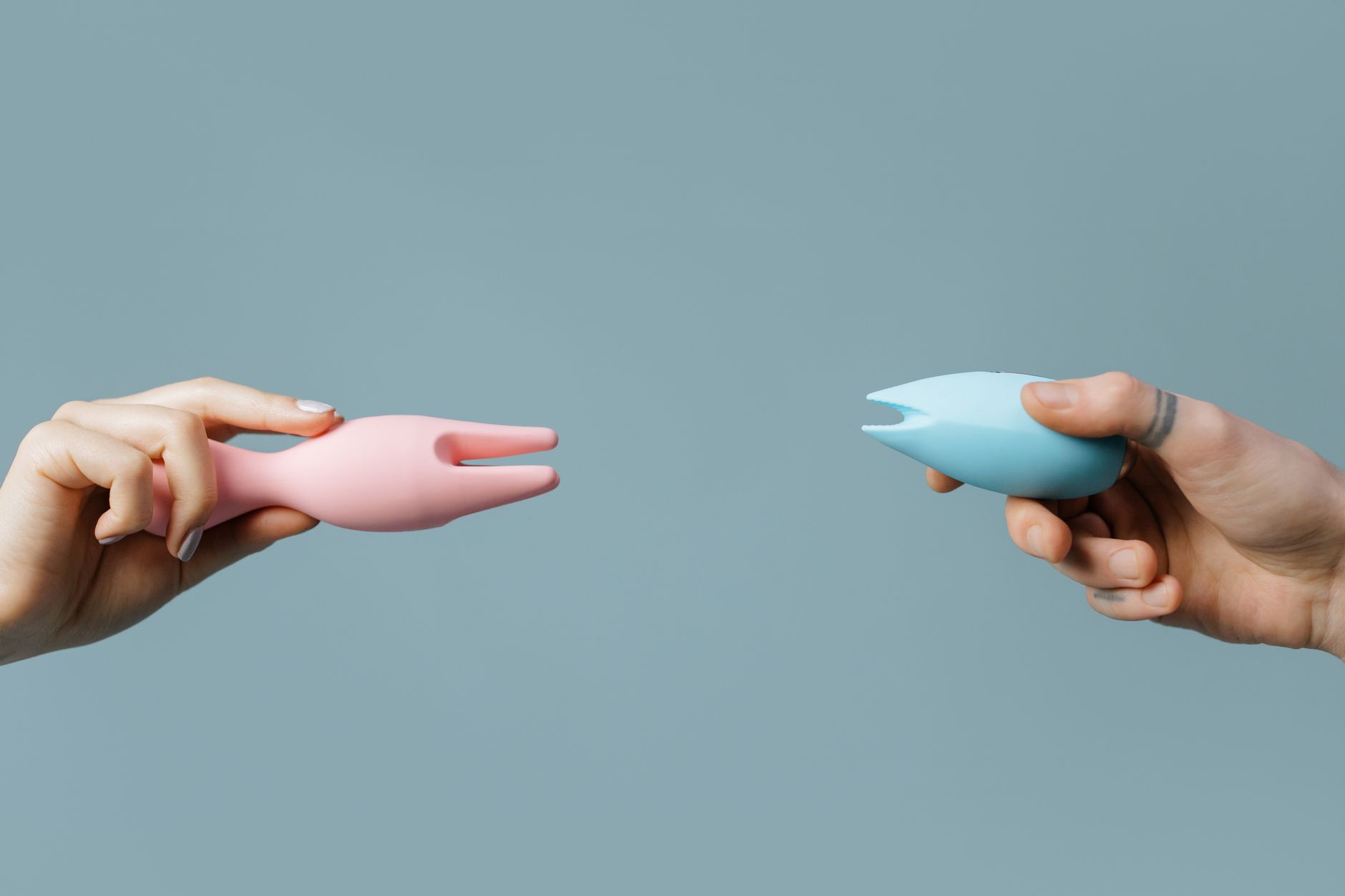
How to Use a Lemon Vibrator When Rebuilding Arousal After a Relationship Break
Time apart changes how your body responds to touch. A lemon clitoral vibrator can help you rediscover desire on your own terms, then bring that confidence back to your partner.
Let's be real. After a relationship pause—whether it was weeks, months, or longer—reconnecting physically doesn't just pick up where it left off. Your body remembers, but it also forgets. Arousal that used to arrive on cue suddenly needs an invitation. Desire that felt automatic now requires permission. That's not a problem. That's just how bodies work after space.
Here's what I see happen in my practice: couples come back together with genuine excitement, but the physical part feels stalled. They blame stress, or they blame each other, or they blame themselves. What's actually happening is that arousal is a skill that atrophies. It needs practice. And the best place to start that practice is solo, with a tool that gives you immediate, reliable feedback about what your body still wants.
When couples have been apart, the pressure to perform (on both sides) becomes the biggest obstacle to actual arousal. A lemon clitoral vibrator removes that pressure entirely. You're not performing for anyone. You're not waiting for a partner to get on the same page. You're alone with your own nervous system, relearning what turns you on.
The suction pattern that lemon vibrators use is particularly useful here because it doesn't require the kind of sustained mental focus that manual stimulation does. With a partner's hand or another type of toy, you're managing their pace, their pressure, whether they're getting tired. With suction, you're just receiving. That passive receiving is exactly what helps your nervous system downshift from "I should be aroused" to "Oh, I actually am aroused."
The other reason a lemon vibrator works is speed. Most couples who've been apart need arousal to build faster than it naturally would in a partnered setting. A lemon vibrator gets you there in 10 to 15 minutes. That removes the frustration of "Why is this taking so long?" and replaces it with genuine pleasure.
The first step is knowing what you're working with. Before you invite your partner back into the picture, spend time rediscovering what your body responds to right now. That's not what it responded to six months ago. It's what it responds to today.
Set aside 15 to 20 minutes when you're not rushed or anxious about being interrupted. Alone time is non-negotiable here. Use a water-based lubricant even if you don't think you need it; it reduces friction and helps the suction mechanism work more effectively. Start on a lower intensity setting (usually patterns 1 through 3) and give yourself permission to spend five to ten minutes just getting used to the sensation without expecting anything.
Most people rediscovering arousal after a break benefit from a bit of context setting. Read something that interests you. Watch something that appeals to you. Lie down somewhere comfortable. Let your mind wander before you even pick up the lemon vibrator. Arousal doesn't live in the genitals. It lives in your brain first.
I usually recommend solo practice for two to four weeks before bringing a partner back into partnered play. That's not a rule. It's a rhythm. Long enough to remember that your body works, that you can orgasm, that pleasure is still available to you. Short enough that you're not adding separation to the separation.
During this time, track what actually turns you on. Is it a certain type of mental scenario? A particular rhythm or intensity? How does arousal feel different from how it felt before? You're gathering data, not performing. That data becomes useful when your partner asks, "What can I do that feels good?" You actually know the answer instead of guessing.
One thing I see happen frequently: people expect arousal to feel exactly the same as it did before the break. It often doesn't. It might feel more intense or more scattered. It might peak differently or take longer to build. That's normal. Your nervous system has been through a transition. Let it be different for a while.
When you're ready to include your partner, the conversation shouldn't be "I've been using a vibrator and now I want us to have sex." The conversation is "I've been reconnecting with what feels good, and I learned some things. Can we explore together?"
Show your partner if they want to see. Some people find that incredibly hot. Others find it less relevant and just want to know the practical takeaway. Both are fine. What matters is that your partner understands: you're not broken, you just needed time to warm up.
There are a few ways to incorporate a lemon vibrator into partnered play. Some couples use it during foreplay while the partner touches them elsewhere. Some use it solo while the partner watches and stays connected through touch or conversation. Some use it as part of a longer session that builds toward partnered sex. There's no script. The point is that you now have a tool that works reliably, and you can invite your partner to witness or participate in your pleasure instead of carrying the burden of creating it.
Here's something couples often don't talk about: after time apart, the intensity of orgasm sometimes shifts. Some people find their orgasms feel stronger because they're actually present for them, not distracted by relationship worry. Others find them quieter because the nervous system is still reestablishing safety. Both are temporary.
A lemon vibrator can help you understand which direction you're moving. If your orgasms feel muted, consistent use over a few weeks often wakes that up. If they feel overwhelming, using lower intensity settings gives you a gentler entry point. You're calibrating, not diagnosing something wrong.
One important detail: if you're returning to a partner you've had a difficult history with, arousal might be slower because your nervous system is still deciding if it's safe. That's not a vibrator problem. That's a deeper conversation you might want support with. A lemon vibrator is a great tool for reconnection, but it's not a substitute for rebuilding trust.
After time apart, bodies reconnect more easily than minds do. You might feel sexual desire come back while you're still uncertain about the relationship itself. That's not a contradiction. Desire is its own thing, separate from commitment or security.
If you're using solo time with a lemon vibrator to figure out your actual feelings, that's legitimate. If pleasure feels good and the relationship feels uncertain, you're allowed to sit with both. You don't have to choose. You also don't have to rush back into partnered intimacy just because your body wakes up faster than your heart does.
The gift of rebuilding arousal on your own first is that you get to know what you actually want instead of what you think you should want. That clarity helps every conversation that follows.
If you're weeks into solo practice and arousal isn't returning, or if the thought of touching yourself brings up anxiety, that's a sign to talk to a therapist. Sometimes arousal doesn't come back on its own timeline because there's something deeper the nervous system is protecting you from. That's not a failure. That's information.
Similarly, if your partner is willing to reconnect but you're still unsure, or if the break happened because of betrayal or disconnection that feels unresolved, a couples therapist can help you figure out whether rebuilding is what you actually want. A lemon vibrator is a wonderful tool for many things. It's not a replacement for the harder conversations sometimes necessary.
It varies widely. Some people feel desire return within days. Others take weeks or months. If you're using a lemon vibrator regularly, most people report that consistent sensation practice helps arousal build more reliably within two to four weeks. The key is consistency, not intensity. Fifteen minutes twice a week matters more than one marathon session.
Not typically. What can happen is that your nervous system learns to expect the specific pattern of a vibrator, which is different from partnered touch. That's why it's helpful to use a vibrator solo while you're rebuilding, then bring it into partnered play rather than switching suddenly. Your body adapts. How Lemon Vibrators Help Rebuild Physical Intimacy After Prolonged Stress covers this in more detail.
Variation is your friend, especially when you're rediscovering arousal. Try starting on lower settings (1 through 3) to let your body adjust, then gradually experiment with higher settings on different days. This helps your nervous system stay engaged and prevents the numbing that can happen if you use the same intensity every single session.
This is about conversation, not the tool. Let your partner know that solo practice is about you getting clarity on what you want, not about preferring the vibrator to them. How to Use a Lemon Vibrator When Rebuilt Connection Feels Fragile talks through how to navigate this specific dynamic with a partner who's anxious about intimacy tools.
Completely normal. Sometimes pleasure after absence hits differently because it means "I'm back in my body" or "This relationship might actually work." You might cry, laugh, or feel a surge of grief for the time that was lost. All of that is valid. Let it move through you without trying to fix it.
You're ready when arousal feels consistent solo and the thought of partnered intimacy doesn't bring up panic or resentment. Ready doesn't mean perfect. It means your nervous system has settled enough that you can show up with genuine interest instead of obligation. A lemon vibrator is a reliable way to check in with what your body actually wants.
Rebuilding arousal after time apart isn't about forcing things to feel the way they used to. It's about discovering what they feel like now, in this version of your life and your body. A lemon clitoral vibrator gives you a concrete way to practice that discovery. It's not the point. It's a bridge. The point is that pleasure belongs to you, always, and sometimes you need a little help remembering that.