Let's name the actual problem
Sensitivity mismatch is one of the most common friction points couples never talk about. One partner finds standard vibration way too intense. The other barely feels it. You end up negotiating pleasure like a hostage situation, which is exactly as unsexy as it sounds.
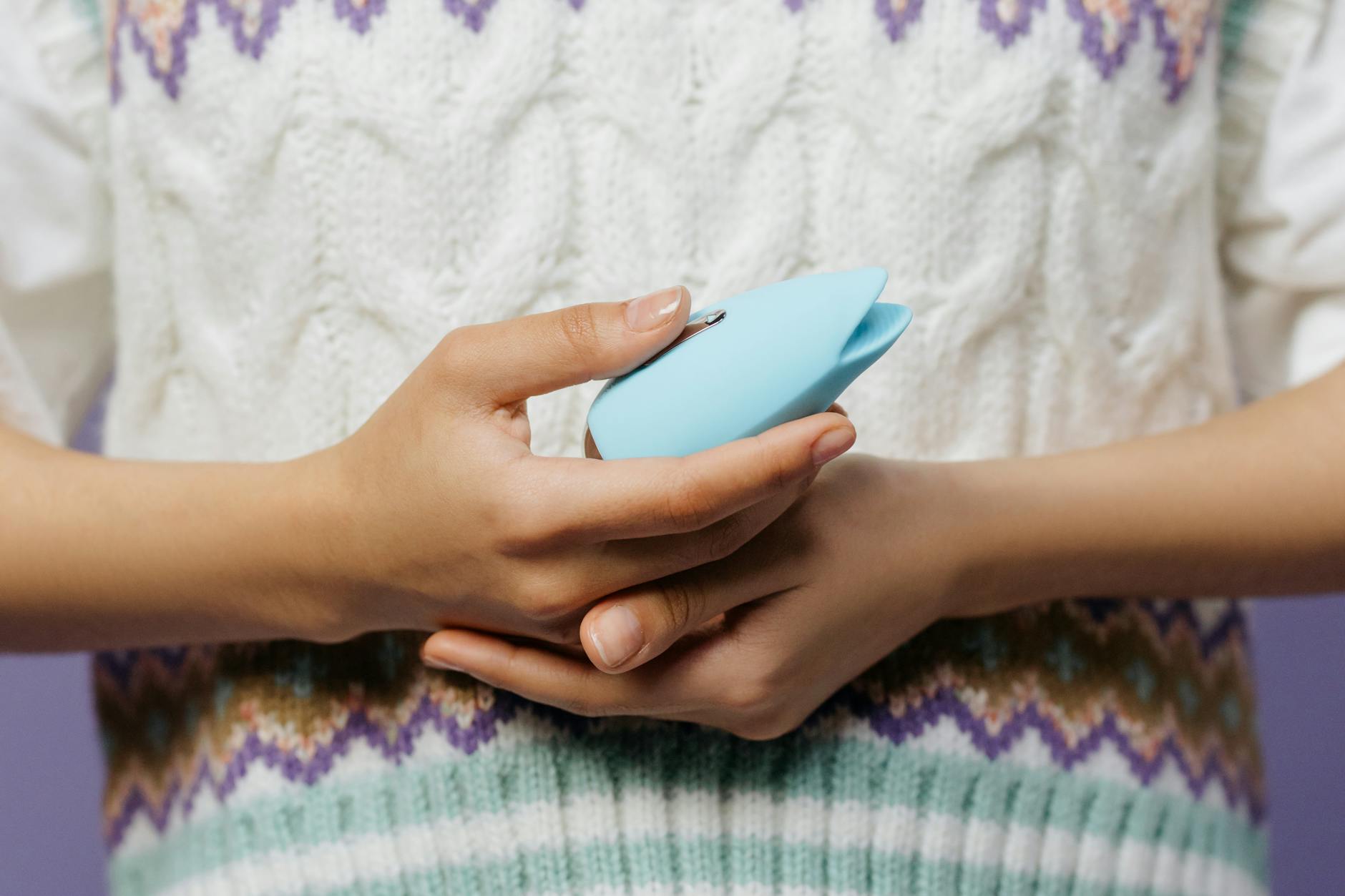
Here's what most couples get wrong: they assume a lemon vibrator will fix this because it's a toy, and toys are supposed to be universal. They're not. The brilliance of clitoral suction (which is what the Lem does) isn't that it works equally on every body. It's that it scales. The same device that drives one partner wild at intensity three can be set to intensity one for someone else, and both of you are actually enjoying it. Not compromising. Not pretending. Actually feeling something.
I work with couples regularly where this dynamic is quietly killing intimacy. The person with lower sensitivity feels broken. The person with higher sensitivity feels like they're constantly being told no. A lemon vibrator with multiple suction intensities lets you both show up as you actually are.
Why sensitivity differences happen in the first place
It's not that one of you is more sexual. It's not about attraction. Clitoral sensitivity is determined by a bunch of overlapping factors that have nothing to do with desire.
Anatomy is the first one. Clitoral hood thickness, nerve density, and the distance between the clitoris and the vaginal opening all vary. A lot. Someone with a thicker hood naturally needs more direct stimulation to feel anything. Someone with a thinner hood or more exposed tissue might find that same intensity overwhelming. Neither is better. They're just different.
Hormonal fluctuation matters more than most people realize. If one of you menstruates, sensitivity probably changes throughout the cycle. Day seven might feel completely different from day twenty-one. That variability can make it feel like you're never on the same page, but you actually are. You're just operating with different hardware.
Medication, stress, and neural history all play a role too. Some antidepressants genuinely reduce clitoral sensation. Chronic stress makes it harder for the nervous system to register pleasure. And if someone has spent years numbing out through a previous relationship or trauma, the nerve pathways for arousal need time to wake back up. A lemon vibrator can help with that rewiring, but it doesn't erase what came before.
The actual mechanics of why clitoral suction works across sensitivity ranges
Regular vibrators apply the same oscillation speed to every part of the clitoral tissue. The intensity either works for your sensitivity or it doesn't. You're stuck adjusting your body instead of the tool adjusting to your body.
Clitoral suction (the technology inside the Lem) works differently. It creates a gentle vacuum around the clitoris and releases it in a rhythmic pattern. That pattern can be adjusted. Lower intensities feel more like slow, soft massaging waves. Higher intensities feel more like focused, pulsing suction.
Why does this matter for sensitivity differences? Because suction stimulates the entire clitoral network. The external clitoris (the part you see) is connected to about twelve thousand nerve endings, but the clitoris actually extends internally in a wishbone shape. Suction stimulation reaches both the outer and inner structures, which means even someone with naturally lower external sensitivity can feel something happening deeper in the tissue.
For someone with higher sensitivity, the lower suction intensities still provide enough sensation without triggering that overloaded, numb-out feeling that happens when vibration is too intense. You're getting actual pleasure, not white noise.
How to set this up so it actually works
Start by naming the dynamic without shame. "We like different kinds of stimulation" is not a failure. It's data.
Then, one of you should explore the Lem alone first. Get to know it. Figure out what intensity actually feels good for your sensitivity level, without the pressure of your partner watching or waiting. This takes the performance anxiety out of the equation. You're not performing pleasure. You're discovering it.
When you come back together, lead with what you found. "I like it at three, and I enjoy it more when I have the whole session to build up." "I'm more sensitive, so I work up from one to two over a few minutes." You're not negotiating. You're reporting.
Then the conversation shifts. Instead of "Can we find a setting you both like?" (which is doomed), it becomes "How do we both get what we actually need?" Sometimes that means taking turns. Sometimes that means using different tools. Sometimes you discover that using the Lem together in a way that honors both sensitivities actually works.
When to take turns (and why that's not boring)
Look, I know the cultural messaging around couple's toys implies simultaneous pleasure is the goal. It's not. It's one possible goal. The actual goal is both people feeling good.
Taking turns can be wildly intimate if you shift your mindset. One of you focuses entirely on pleasure while your partner is present, attentive, and invested in your experience. That's not compromise. That's being held. Then you switch. That's also being held.
This is especially helpful when sensitivity levels are far apart. If one person needs intensity six and the other maxes out at intensity two, you're not going to find a magical middle ground. But you can each have a version of the experience that actually feels good to your nervous system.
When sensitivity feels like it's shifting mid-session
This happens a lot and people panic about it. You were feeling great at intensity three, and suddenly three feels too intense. Or you were numb at intensity two and then two started working.
That's normal. Arousal isn't a linear climb. Sometimes the clitoris becomes more sensitive as blood flows to the area. Sometimes it becomes less sensitive if you're approaching the threshold of orgasm (which is a real neurological phenomenon). The intensity that works at minute three might not work at minute eight.
With a lemon vibrator, you're not locked in. You adjust mid-stream. This is the exact opposite of traditional vibrators where changing intensity feels awkward and breaks the flow.
Tell your partner what you need in the moment. "Lower please." "A bit more." That conversation during sex isn't a mood killer if you're both already bought in to the idea that your sensitivities are legitimate and variable.
The bigger relationship piece nobody mentions
Sensitivity differences often surface something couples have actually been struggling with for years: one person's pleasure has been treated as negotiable while the other person's was treated as non-negotiable.
If you're the lower-sensitivity person, you might have learned that your pleasure "takes too long" or "is complicated" and internalized that as a flaw. If you're the higher-sensitivity person, you might have learned to minimize your needs because "normal" pleasure looks different for your partner.
Neither of those stories is true. Your actual sensitivity is correct. Not everyone's clitoris is the same, and that's genuinely fine.
A lemon vibrator is a tool. The real work is agreeing that both of your nervous systems deserve attention. That both of you get to have pleasure that actually feels good to your body, not pleasure that's been negotiated into someone else's tolerance range.
Once you're both clear on that, the tool just becomes the vehicle. And when you're introducing a new toy together, some of the awkwardness can be softened with the right conversation beforehand.
The sensitivity question that changes everything
Before you even buy a lemon clitoral vibrator, ask yourselves this: "What would pleasure feel like if we both just... got to have it our own way?"
Because that's actually the option. You don't have to find the setting that barely works for both of you. You get to find the setting that actually works for each of you. And that's the whole point.
People also ask
Can two people with different sensitivities use the same lemon vibrator?
Absolutely. The Lem has multiple intensity levels specifically for this reason. One partner can prefer intensity one or two, while the other uses intensity four or five on the same device. You're not buying two toys. You're just using one tool in the way that matches each person's nervous system. This is actually one of the biggest advantages of clitoral suction over traditional vibrators, which often feel like a one-size approach.
What if my partner is uncomfortable with me using a lemon vibrator at a different intensity than they would?
That's worth exploring gently. Sometimes that discomfort is about comparing pleasure ("If you need a higher intensity, does that mean I'm not doing enough?"), and sometimes it's about control or fear of inadequacy. Those are real feelings, and they need real conversation, not just reassurance. For deeper guidance on navigating those conversations, this post on introducing toys without awkwardness covers the emotional landscape more fully.
If one person needs much higher intensity, should they just use a different toy?
Not necessarily. The Lem's range (usually up to intensity four to six depending on the model) covers most sensitivity variations. But if someone's sensitivity is so extreme that even the highest setting feels underwhelming, supplementing with a different type of stimulation sometimes helps. The combo of clitoral suction plus penetration, or suction plus vibration from a different toy, can bridge very wide sensitivity gaps.
Does sensitivity always stay the same, or does it change over time in a relationship?
It changes constantly. Stress, hormones, emotional closeness, physical health, age, and even the time of year can shift clitoral sensitivity. What you both loved last month might feel different this month. That's not a problem to solve. It's just information that means you keep talking about it and adjusting as you go. A tool that lets you adjust (like a lemon vibrator) makes that much easier than a tool with one fixed intensity.
What if neither of us is sensitive to the same sensation as the other, and we've never found anything that works for both?
You might be dealing with a mismatch bigger than sensation alone. Sometimes low sensitivity is connected to arousal patterns, stress, or emotional disconnection. Sometimes high sensitivity is paired with anxiety or being overstimulated in everyday life. Before you assume it's a physical limitation, it's worth exploring whether there's something else happening in the body or the relationship that a lemon vibrator alone won't address. A therapist or a sex educator can help sort that out.
Is there a way to increase clitoral sensitivity so partners can match more closely?
Sensitivity isn't really something you increase or decrease by force. But arousal does increase sensitivity temporarily. Longer warm-up time, more foreplay, reducing stress, and sometimes addressing medical factors (like medication side effects) can all help the nervous system register sensation more easily. The goal isn't matching, though. It's each person getting to have the pleasure that's actually available to their body.